

Pwyllgor yr Economi, Masnach a Materion Gwledig - Y Chweched Senedd
Economy, Trade, and Rural Affairs Committee - Sixth Senedd
26/11/2025Aelodau'r Pwyllgor a oedd yn bresennol
Committee Members in Attendance
| Alun Davies | |
| Andrew R.T. Davies | Cadeirydd y Pwyllgor |
| Committee Chair | |
| Jenny Rathbone | |
| Luke Fletcher | |
| Rhianon Passmore | Yn dirprwyo ar ran Hannah Blythyn |
| Substitute for Hannah Blythyn | |
| Samuel Kurtz | |
Y rhai eraill a oedd yn bresennol
Others in Attendance
| Andrew Gwatkin | Llywodraeth Cymru |
| Welsh Government | |
| Gian Marco Currado | Llywodraeth Cymru |
| Welsh Government | |
| Huw Irranca-Davies | Y Dirprwy Brif Weinidog ac Ysgrifennydd y Cabinet dros Newid Hinsawdd a Materion Gwledig |
| Deputy First Minister and Cabinet Secretary for Climate Change and Rural Affairs | |
| Jack Sargeant | Y Gweinidog Diwylliant, Sgiliau a Phartneriaeth Gymdeithasol |
| Minister for Culture, Skills and Social Partnership | |
| Jamie Powell | Llywodraeth Cymru |
| Welsh Government | |
| Jo Salway | Llywodraeth Cymru |
| Welsh Government | |
| Peter Ryland | Llywodraeth Cymru |
| Welsh Government | |
| Rebecca Evans | Ysgrifennydd y Cabinet dros yr Economi, Ynni a Chynllunio |
| Cabinet Secretary for Economy, Energy and Planning | |
| Richard Irvine | Llywodraeth Cymru |
| Welsh Government |
Swyddogion y Senedd a oedd yn bresennol
Senedd Officials in Attendance
| Elfyn Henderson | Ymchwilydd |
| Researcher | |
| Nicole Haylor-Mott | Dirprwy Glerc |
| Deputy Clerk | |
| Rachael Davies | Ail Glerc |
| Second Clerk | |
| Robert Donovan | Clerc |
| Clerk |
Cynnwys
Contents
Cofnodir y trafodion yn yr iaith y llefarwyd hwy ynddi yn y pwyllgor. Yn ogystal, cynhwysir trawsgrifiad o’r cyfieithu ar y pryd. Lle mae cyfranwyr wedi darparu cywiriadau i’w tystiolaeth, nodir y rheini yn y trawsgrifiad.
The proceedings are reported in the language in which they were spoken in the committee. In addition, a transcription of the simultaneous interpretation is included. Where contributors have supplied corrections to their evidence, these are noted in the transcript.
Cyfarfu’r pwyllgor yn y Senedd a thrwy gynhadledd fideo.
Dechreuodd y cyfarfod am 09:15.
The committee met in the Senedd and by video-conference.
The meeting began at 09:15.
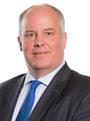
We're now in public session. Good morning, everyone. Welcome to the Economy, Trade and Rural Affairs Committee. We've got the first session of our scrutiny of the draft budget today with the Deputy First Minister and Cabinet Secretary for Climate Change and Rural Affairs and his officials, and we'll follow through then with the Deputy First Minister and the Cabinet Secretary for Economy, Energy and Planning on trade and borders, and then conclude with the scrutiny of the economy Minister in relation to her draft budget proposals at the third stage of proceedings today.
I call for apologies. We have apologies from Hannah Blythyn. Deputising for her will be Rhianon Passmore for two of the three sessions. I call for declarations of interest. I declare an interest as an active farmer.

Thank you, Chair. I'm an honorary member of the British Veterinary Association.

I'm an honorary member of the BVA.
Any others? Chief vet?

I'm a member of the BVA. [Laughter.]
You trump us all. [Laughter.] I don't see any other declarations of interest. Translation facilities are available via the headsets. As we have experienced officials and Ministers before us, I'm sure you're familiar with their operation. A transcript of proceedings will be forwarded to you at the end of today's proceedings.
I'll ask the Minister and his officials to introduce themselves first of all, if possible, please, for the record. I'll start with Jamie and go across. If you could say your name and position within the Government, that would be helpful. Thank you.
Bore da. Good morning. Jamie Powell, deputy director responsible for finance and governance.
Bore da, pawb. Richard Irvine, Chief Veterinary Officer for Wales.
Huw Irranca-Davies, Deputy First Minister and Cabinet Secretary for Climate Change and Rural Affairs.
Bore da, pawb. Gian Marco Currado, rural affairs director.
Thank you very much, all. Deputy First Minister, the budget announced by the finance Minister had an unallocated sum of £380 million in it. Obviously, all Cabinet Secretaries would like more money in their budgets, but if you were to bid for additional money, given the knowledge that you have of how you've allocated your allocation within the overall budget, where would your key areas of growth be where you think you could achieve more, over and above what you've allocated already?
Many areas. Many areas. I could do a lot more—
Could you give us a taste of what you might bid for?
If I was given an additional quantum of funding, we could do a lot more, for example, in the food and drink area of my portfolio, which is a rip-roaring success at the moment. We're overachieving our targets in terms of driving investment into that area and the growth that we've seen in exports. We know that a little bit of money goes a long way in that area, so we could certainly do a lot more. We could do a lot more in terms of nature recovery and restoration. We could do a lot more in terms of the marine environment. We could do a lot more in terms of additional funding into the farming space for productive food that's to the highest animal welfare standards and food productivity.
But the reality is, Chair, that we've got a starting-point budget here. There is a small allocation that is available for use across the whole of the Cabinet space, and the invitation has been put there to all party leaders to come in, and party spokespeople to come in, and talk to us about what their priorities are within that unallocated space. So, some of this is not going to be for me to determine. But what we are convinced of as a Government is that there's a priority here for protecting front-line public services that people rely on on a day-to-day basis, however, we've opened the door for discussions on it.
So, I'm not in that space yet, Chair—I've got to be frank with you—where I'm thinking, 'How do I use the unallocated funding?' We're in a space where the Cabinet has opened the door to other parties to say, 'We need to secure a budget going forward, for the good of Wales, in which case, come through and tell us what your priorities are.' So, I'm not yet in that space—just to be crystal clear with you—where I'm starting to think, 'Well, what could I do with a bit of additional money in areas?'
Yes, but—before I bring Alun Davies in for a supplementary—the interesting thing is: is it a requirement of more money into the system, or better ways of working with what you're doing out there? The cry is always seen as, 'More money to achieve better outcomes', and there is a direct correlation in that, but also the ability to get a better bang for your buck as well then. I was interested in reading papers from the economy Secretary, in her draft budget submission, which talked about business support and how the costs there, from national insurance increases and hourly rates for contractors, had gone through the roof and limited their ability to offer in-person discussions with people. Have you found the same pressures within your budget? Because obviously you commission, through Farming Connect, for example, a lot of kind of advice surgeries, but secondly, you undertake a lot of inspections through Rural Payments Wales, which has had a big increase—a 9.9 per cent increase, I believe.
It's not quite 9.9 per cent.
It's just shy, I think.
No, there are budget reallocations within that, which we can get to in detail, but, actually, it's the same uplift overall for RPW that there is in other areas. We can come into some of the detail in this. It's reallocations—
But back to my principal point: is it solely about money, or better ways of working?
It's both. It's both. I think the first thing is to make sure that always we're driving the most efficient service right across all the areas we're doing. So, whether that's, for example—. In the work that we're doing in local food partnership, it's not simply we put money—. I and my Cabinet Secretary colleague Jane Hutt have co-funded local food partnerships. Now, some of the potential within that is actually to drive, with the more mature local food partnerships, things such as harvesting, collection, cleaning, whatever, of local food stuff, so we can drive local food supply chains. But we're not doing it entirely ourselves. This is money we put in this space for people on the ground, in an expert way, to co-ordinate activity, to bring partnerships together and bring more quantum in. That's a really efficient way of using public funding.
In RPW, which you mentioned, once again, Wales, I have to say, is doing exceptionally well in the way that we deliver payments, administer payments, do them on time, give that certainty to farmers. And we're always pushing RPW to actually say, 'How do we innovate in this space, be even more efficient, get that delivery better for farmers?' So, in all of our areas, your starting point is, 'How do we get bigger bang for the buck that we've got?' And part of this is probably a reflection of the last few years where we've had to have bigger bang for our buck and do more with less. But if you had more funding, you could do more things, of course you could, but you wouldn't squander money. You would actually say, 'This is specifically where we want to see improvement.'
So, if we look in my portfolio area, for example, when we take forward things such as the control of agricultural pollution regulations, but also that space within there, based on Dr Susannah Bolton's review, you know that it's not just to do with regulations, it's to do with where do you put the right incentives to reward good behaviour that does good farming, as well as make healthy rivers, et cetera. You don't throw money at that and see what sticks. You target it very effectively to enable agriculture to thrive and also to clean up your rivers; houses to be built and clean up your rivers, et cetera, et cetera. So, it's both, in answer to your question: do more with what we've got, and if we had more, clearly, I would then sit down with colleagues here and go, 'Right, out of our 101 priorities, where could we really deliver maximum benefit?' For us, I have to say, that probably is in the space of things such as that big space of control of agricultural pollution, what we do—. Sorry, not control of agricultural pollution per se, it's in the water quality space, which is so integral to farming.
When I went to Anuga recently, the big trade show out in Cologne, Welsh food and produce has a reputation for excellence based on this green and pleasant land and based on really good-quality food production that is good for the land, good for animal welfare, and so on. If you ask me what I would do with a bit of additional funding, I'd actually work with farmers, with colleagues and with stakeholders, to ask how we can make that a commonplace reality, so we have no defective systems operating, where we're damaging the soil or damaging the water, so that we can make that stand up and drive even more exports.
If I was to do another area, it would probably be in what more we can do in nature recovery; again, working with land managers, building on what we're doing within the sustainable farming scheme. Environmental groups and farmers have said there's probably a deficiency of—the figure varies—£400 million, £500 million, £600 million that we could put extra into that space. It's never going to come from taxpayers' money alone. But what we can do is bring the right people together with a bit of public funding, within the guardrails of sustainable investment principles, to say, 'Can we collectively drive more money into that space with a bit of Government money, and so on?' So, you're asking me where would my priorities be—
I get a sense of what you're saying. You've had three Shredded Wheat this morning, obviously, Cabinet Secretary, with the answers, fair play to you. [Laughter.] I'll bring Alun Davies in for a supplementary and then I'll ask Luke to ask his principal question.

Yes, and I've been having bacon, so look out. [Laughter.]
You've described a very appetising menu there of opportunities for investment, not just throwing the cash around, but investing in really critical areas. What that indicates to me is that the Welsh Government has taken one decision, and that is it's not going to go to a final budget with £380 million unallocated.
Indeed, absolutely.
So, we're going to allocate that money when it comes to the final budget. So, the conversation that is taking place now between different political parties is about relative priorities.
It is.
And what you've described to us this morning is the conversations that you will be having, I presume, with your opposite numbers in other political parties.
Yes, very much. Very much.
And without seeking to press too hard on issues where I know you wouldn't want to be too definite, are those shared priorities across the political divide?
I think it's too early to say; it genuinely is. Because I think at the moment, I mean, I've got colleagues who are deep in the discussions, now that door has been opened with those political parties, on what their priorities are. As an individual Cabinet Secretary, if that were to reflect some of the priorities in my portfolio, I'd be delighted. But I do not know what that will come out at, Alun. As a Welsh Government, collectively, we are really hopeful that the focus is on making sure, first and foremost, that we are protecting those front-line services and front-line jobs. Beyond that, let's see where this gets over coming weeks. But we're seized with the importance of passing this budget.
Yes, but it's your department, really, that's bearing the brunt of the damage done by Brexit as well, where Brexit has undermined the economy of rural Wales. So, it's important, therefore, that we are able to protect rural Wales as well—
Indeed, yes. Very much.
—from some of that damage, and ameliorate the damage that Brexit continues to do to us.
Yes, I entirely agree. And you cannot take away the fact that—. Some people would like us to stop talking about this, but the reality is, this did damage to our trading with our nearest neighbour. We've done significant work, I have to say, and I was talking about food and drink a moment ago, and we've really targeted now some of those opportunities in other export markets. The work we are doing, for example, with the middle east, with India and places like that, is all credit to a very small team, a very expert team, who are working with the supply chain as innovators, matchmakers, and whatever, and we are doing deals around the world. But our nearest neighbour, that has impacted.
And it isn't just on what we often talk about in this committee, on agriculture, it is on issues like fisheries. We have a very characteristic fisheries industry in Wales. It is heavily dependent on shell fisheries. We are really hopeful now, because the Government has now opened up those discussions around the way forward on fisheries. Some of it is tricky, but there is a possibility that we could open up shell fisheries markets again.
The big impact that we've seen from Brexit has not been just losing the money, but it has also been those cross-border transactions. When you get lorries stuck at Dover or whatever, waiting for 24 hours or whatever to pass through, and the paperwork—the paperwork has increased with our nearest neighbour on the back of Brexit. That means that some people are choosing not to export there because they don't want their goods perishing on the portside.
Now, we've tried to find ways to work through it, but there is a hard reality. What we've been able to do, Alun, is actually say, particularly in terms of our fisheries approach, ‘We're going to keep on investing within our fisheries, distinctive fisheries.' We have our fisheries management plans we're bringing forward, to give them certainty on that as well. We have the welcome announcement, I have to say, from UK Government that the coastal communities and fisheries fund, it's for us to make the decision on that, and it's being allocated to us to make the decision on.
But also in agricultural funding, we have given that certainty of just short of—. What’s the sum of the funding now?
It's £360 million.
There we are: £360 million going into that space. So, we've done our darndest—I was just about to swear—our darndest to make sure that we are giving certainty to the rural community, the agricultural community, the fisheries community, that we will keep investing. But you are right, your fundamental point is right: it did damage.
It might be useful for the committee to have a word on fisheries at another time and to refer back to the Minister on that when you come to take those decisions.

It's a good segue into the questions I was going to ask around fisheries. Within the budget, we've had an increase of 2 per cent in both resource and capital. I think there are many people who would welcome what the Cabinet Secretary has just said around wanting to continue to invest in the sector. You touched on the UK Government's fisheries and coastal growth fund. The allocation that's been given to you is £18 million, is that correct?
It's £18 million over 12 years.
Over 12 years. Taking on board what you've just said around still needing to make a decision on how that money is used, has there been any intention or discussions around ring-fencing that £18 million for fisheries specifically?
Sorry, I see what you're saying. No, we're not at that detail yet, because so far, even though the headline amount has been announced, and it's very good it's being passed directly to us, which is absolutely what we've asked for, which will allow us to make the decision, this is a devolved context, this is a devolved area of competence, but we don't yet know the full profile of the £360 million that's been allocated across the UK over 12 years, so we don't know how much funding is going to be allocated each year. Once we have the full profile, we can get on then with saying, 'Right, what do we want to do with this?' It's coastal communities and fisheries.
In terms of some of the investment you could do with that—and we'd be interested in what the committee's views on this are as well—you could say, 'Let's accelerate the work we're doing on fisheries management plans'. We're well advanced on those, and we have that within the budget already, but if we had more money, maybe we could accelerate the fisheries management plans and the work we're doing on it. It's not necessary, because it's already within the budget, but we could do more. We could alternatively look at the wider health of those coastal communities. We could do some quite innovative things there. Fisheries is part of those coastal communities, but there is a wider piece.
We haven't made those decisions yet because we don't know the full detail, but what we will be doing is making those decisions in a very strategic way, based on evidence of where the money would deliver the biggest bang for the buck. That could be investment in fisheries directly, in the fleet, and so on. It could be in other creative ways. Officials at the moment are working to try and understand what the detail of this funding is year by year and how we could use that, and how the fund can be used to provide support to the fishing industry and to coastal communities. I'll also be having discussions with the Cabinet Secretary for Finance and Welsh Language as part of that as well, because part of this is clarifying, through his team as well, exactly what the detail is.
You can probably guess what the next question is going to be. When can you expect to be able to know the detail of it and start planning about how the money is being used? Because £18 million isn't an insignificant amount of cash in this particular portfolio area, so it will go a long way in a number of different ways, whether that's in the regeneration of coastal communities or the fisheries themselves.
I don't think it'll be long. But in the reality of this in the discussions—.
It'll take time. The announcement is relatively recent, as you'll know. I think it was the back end of October when we got confirmation of the £18 million. So, it'll take some time to work through the profiling, as the Deputy First Minister has said, to better understand that. 'We don't know' is the honest answer, but it's going to take some time to work through that with officials and then, ultimately, through Ministers.
As Alun Davies said, it would be useful, once decisions are starting to be made and the detail is understood, if the committee could be updated on that particular part of it.
We will indeed.
If I could just touch on the fisheries management plans. We've had two of them—king scallops and bass. Within the current budget allocation, putting aside that additional money that's coming down the line, is there enough money in the budget to be able to deliver the remaining fisheries management plans?
'Yes' is the answer. It doesn't rely on this funding. This funding is welcome, because it is additional and it's great to see the UK Government have provided this. It's roughly Barnettised. Roughly speaking, we're broadly content with the allocation that we've got, but it's in addition to what we're already allocated in the budget. As you mentioned, we've got two FMPs in place already, including the king scallop—sorry, we're currently consulting on the king scallop FMP. We're also in joint consultation with the Scottish Government on a draft hake FMP as well. But any funding from here that may be allocated to that would, in essence, just accelerate what we're doing. It doesn't rely on this funding at all. We could be quite inventive and innovative in the way we use this additional funding that we now have. You're right: in terms of fisheries and coastal communities, it's a relatively small amount in the grand scheme of things, but it can actually go a very long way.
When you say the additional money could accelerate the management plans, in what way would they be accelerated as a result of that?
We could work with stakeholders to either increase—. For example, the FMP on king scallops that we're currently consulting on has a range of measures to do with sustainable scallop fishery. We're ahead of other parts of the UK, I would argue, on this. We have a very different context. We have a lot of good evidence-based analysis. We work with places like Bangor University. Some of the initiatives that are within that consultation are to do with things that are much more sustainable—for example, non-bottom-trawling approaches to king scallop fisheries, and so on. We could accelerate work on that, for example. It's not to say we will, but we could accelerate work on that. We could actually bring forward, at a greater rate of knots, other FMPs that we currently have in a schedule going forward. We could bring those forward and move forward faster.
There are other aspects we could do that are linked to the FMPs, which would be to do with wider investment within the fisheries fleet itself. We have a distinctive fleet. There is always a need—. For example, over recent years, we've invested with skippers in some of their technology on board the vessels. We could do more of that. There are lots of opportunities here, but none of it relies on this new funding. We are progressing well on the FMPs and on the wider work that we're doing with our fishery stakeholders, but this would simply mean we have more choices about fast-tracking some work or boosting some of the work that's currently under way.
Okay. I'm looking forward to seeing the detail as it becomes available. Diolch.
Thank you. Sam.
Thank you very much, Chair. Good morning, Cabinet Secretary and Deputy First Minister, and your colleagues. The sustainable farming scheme and the common agricultural policy legacy have very similar quantums of funding. But the Farmers Union of Wales have said that the new scheme will have substantial additional costs to businesses because it places greater societal and environmental demands on participating farming businesses. How do you respond to the FUW?
We are asking farmers to do more. That's undoubtedly the case. It is what we've described as a whole-farm, whole-Wales basis. In line with the sustainable land management principles, those four objectives, we're trying to devise a scheme here that genuinely provides a thriving future for farmers as farm businesses and good, productive food. But we're also asking them, within that, to do more things on the environment. Within the universal layer, it's 10 per cent habitat within it. We're looking at enhancement of hedgerows, at thickening of hedgerows—
I know that part of it, but that's doing more for the same quantum of funding. The FUW are asking about the substantial additional costs. How do you respond to the FUW's concern around the costs of the scheme and the same quantum of funding?
The flip side of this is I think this is the only scheme, to my knowledge—certainly in the UK, but probably across the whole of Europe—that has, for example, a social value payment within it. I've forgotten the exact sum of money now—
It's £107 per hectare.
It's £107 per hectare. That's a social value payment that recognises the distinct characteristics of Welsh farming: small and medium-scale farming, the importance of the Welsh language—all of those things. This is actually built into the scheme. Because of the work that we've done with stakeholders, because of their push to say, 'Can we actually find some recognition of the additional value of farming to our landscape, our environment, our culture, our rural economies', we've built those sorts of things in. I could have waxed lyrical on more details about how we've done that. So, actually, what we've got is a scheme that asks farmers to farm and be—what we've always talked about, what I've proudly talked about—stewards of the natural environment—
Okay. We're not getting into the policy here—it's the finances. So, are you saying the FUW's concerns are unfounded on the financing and that financial support?
No. I think they're right to point out that farmers are being asked, for the quantum of funding that's being put in by the taxpayers, to do not only productive food, but also environment and climate resilience as well. Bear in mind that many of these are to protect farmers for the future. When you invest in good soil health, when you invest in the right tree in the right place, all of these things of climate resilience are to do with the good of farmers and the productivity of farmers, as well as the wider Welsh public—
So the FUW needn't worry.
No. I would say that the FUW need to continue doing what they've done very well, which is to engage with all of us—myself as Minister, and others—on the right use of that money, to do a number of things under the SLM objectives for the good of their farm and farmers, and also for the good of what people in Wales are looking to get out of that investment in farming. Because bear in mind this is still public money going into farmers, and it's right that we should—
Yes, it keeps food prices down, doesn't it?
Indeed. It keeps food prices stable, it produces—if we line the incentives up right—very good animal welfare standards, the right use of our green pastureland outside. But it is important that we deliver multiple objectives through this, including, for the benefit of farmers, future climate resilience. So, I do understand what the representatives of the farming unions are saying, but they've been integral to the design of this scheme as well.
Okay. Moving on, there's £238 million for the universal, approximately £102 million for the optional and collaborative, and there'll be tapering off of the basic payment scheme. How much are you anticipating, from that BPS taper, will be moving over to the optional and collaborative tiers? Because, obviously, what you're trying to do is steer farmers towards the optional and collaborative tiers to satisfy the environmental lobby, because that was the discussion—
I disagree entirely.
Well, that was the discussion in the Chamber when this scheme was brought forward, by some Labour backbenchers. That was the prioritisation, through the optional and collaborative tier. So, how are you expecting that budget to grow in line with the BPS taper?
First of all, I disagree fundamentally with the whole premise of the way you phrased that question. The optional and collaborative bring an additional quantum of funding into farmers to do additional things that are good.
On the environment.
No. Let's make it clear: for the environment, which farmers always say to me they're very keen to do—so there's money to pay them for doing that—and also for climate resilience. And just to be crystal clear again: climate resilience is not just for the good of little old Wales, it is for the good of the productivity of these farmers going forward. You've got a farming background yourself. If we do not deal with the increasing propensity now towards periods of drought and deluge that we are facing, then we will do a disservice to those farmers. So, this is not me saying let's drive a—
Okay. On the finances, moving away from the policy—this is budget scrutiny—how do you see that quantum changing from BPS taper into the optional and collaborative?
Thank you. On the basis of that, we've made very clear that we've set the maximum level of the universal layer, and we've set a minimum level of the optional and collaborative, which we're progressing, and we've made clear that those optional and collaborative ones, some of which are coming into play now, will develop over the course of the next couple of years as well. As that develops and as they are attractive to farmers and landowners as well, to draw down the funding from the optional and collaborative layers, then the funding that is released, as we taper down the universal layer, will go increasingly into the optional and collaborative. This is money available to farmers and land managers, but it'll go increasingly into those layers. So, those upland hill farmers who want to do, for example, additional work on hedgerows or—
Sorry, Deputy First Minister, I'm going to move away from the policy again. I'm trying to get the quantum of funding you're expecting to see in pounds, shillings and pence. What are you seeing moving across, because of the 40 per cent—
I'll come to Gian Marco, but we can't be definitive, because until we know what the take-up from farmers is—. It opens on 1 January and runs until May. As those months go forward, and hopefully we'll have a high take-up—and certainly based on the round-table experience, the positivity we've heard from farmers, we hope that we will—then we will know, and we'll be able to say what the trajectory might be. At this moment, the scheme isn't open. At this moment, we don't know how many farmers are going to join it.
Okay. So, it's question marks on how much money may be released from BPS.
Exactly. But we've set the taper—
Just before we move off this point, Jenny had a supplementary on this.

I just wanted to know whether we're spending enough money on getting farmers to start to grow more food for Wales, as part of our climate resilience and food security concerns. In the last contract that Farming Connect had with Lantra, it was only sufficient to pay for eight full-time equivalent individuals to work with farmers on diversifying into vegetables and fruit. That didn't even meet the demand, never mind going out there proactively trying to encourage people to diversify. So, I want to know what's in the—. How do you control the Farming Connect contract in terms of the priority it should be giving to growing for our schools? Ten tonnes of carrots is not going to feed the children of Wales.
Yes. The Farming Connect contract now, as we transition into the sustainable farming scheme, is out for contract, so there's a limited amount I can say about that at the moment. But in terms of the investment in—. The investment in growing for schools, growing for other areas of public procurement, both at the capacity of the local level, which we're doing through things like Local Places for Nature, but also the work with Lantra and so on, will need to grow in lockstep with the ability of, the capacity of, that sector to provide more and more, and the work we're doing with people like Castell Howell and so on. But—. Do you want to add to it, Gian Marco?
Well, I'm not convinced that we've got it right. You're telling us that you've got great guns going on in the export of food—fantastic, but we're not growing enough to feed the people of Wales, and that's been a long-term problem. And because of climate change, we absolutely have to do that. And we also have to have, you know, tastier vegetables, frankly, rather than the ones that come from goodness knows where. So, as I say, there wasn't enough money put in to even meet the demand in the last Farming Connect contract, so how are you ensuring—? I appreciate that the details of the contract you're not going to go into, but how are you ensuring that there's a greater emphasis on expanding horticulture for Welsh consumption?
So, a number of ways that go beyond individual budget lines here. So, the community food strategy is very much predicated upon—
Okay, but that's a whole different story. I just want to know how we're persuading farmers that, as well as doing dairy or rearing of cattle, they could also develop, you know, horticulture for their own population?
I'm going to give you one more chance to answer that and then we're going to have to move on, we are, because time is going beat us. So, give it a go.
So, you're familiar with the work that we're doing on the veg in schools project; you're familiar with the work that we're doing with Castell Howell in developing—
I am, but it's not sufficient.
—with procurement. I realise it's not sufficient for where we need to get to ultimately, but, actually, we're building capacity in that space every day, every month; we're growing this. So, we have farmers now who are producing—you've probably met a few of them. We need to grow that. But we can't magic it up, we've actually got to encourage, incentivise, put the right funding in place; Farming Connect support is in this space as well.
Sorry, can you send us a note on how much of this budget is dedicated to providing advice and support to people who want to expand into horticulture?
We can certainly do that in the current—
Thank you. Sam, do you want to carry on?
Yes. Thank you very much, Chair. So, the Bank of England inflation calculator says the budget should be approximately £500 million; you referenced that earlier, Cabinet Secretary. But there is a Barnettisation now of agricultural funding. What are your concerns around that from a fiscal perspective?
We are happy with the Barnettisation of funding by and large; what we're not happy with is with Barnett as it stands overall. So, I'm glad that there are discussions outside of my Cabinet portfolio, wider within Government, with the Cabinet Secretary for Finance and Welsh Language on refining Barnett, how it applies across the regions. This isn't a Wales-only issue; this is Wales, Scotland and other partners. So, it has to be done in that way.
But, for your finances, in your portfolio, Barnettisation has meant you've had less.
Barnettisation has not stopped us investing significantly in all the areas described. So, we've got—
That's a very clever answer, because you've said you've been able to invest in the areas you want without answering the question as to whether you've had less due to Barnettisation.
In terms of this year's budget, what we've had come over from the UK Government is the baseline, and the baseline isn't Barnettised; that was based on the previous calculations that the previous UK Government made, which took into account some of the money that we'd received already. So, it was lower than we were expecting at the time, but that baseline has come across. Our understanding of what the UK Government has proposed is that any changes to that will be Barnettised, in the sense of, if there is an additional amount going into England, we will get a Barnett consequential of that additional amount. That's how we understand the changes.
So, in terms of this year's budget, the amount that has come over is the same as what came over last year and then Welsh Ministers have agreed to add additional money, so that the quantum that is going into agriculture from Welsh Government is greater than that.
Okay. That's a very helpful clarification.
Alun Davies, a supplementary.
But we need to understand the negotiations that you're having with the UK Government on this. I recognise the work that Mark Drakeford is doing, and I think that is very important, but a straight 5 per cent of an England number is a disaster for agriculture because of the greater production that takes place in Wales. So, I presume that, when you're negotiating these matters with the UK Government, you're looking at a different number for Wales based on the actual relative production needs in Wales, rather than simply the population basis?
Yes, so, we've gone, just to be clear, above and beyond. So, the baselining of funding to the Welsh Government budget is just short of £340 million. We're actually providing over £363 million through the agricultural support here in Wales. So, we've gone above and beyond. We've recognised the integral importance of agriculture to Wales, and we've made that decision as a Cabinet. So, yes, that's our devolved decision: we recognise the importance, we're investing in it.
But my question was about the negotiating position that the Welsh Government is adopting vis-à-vis the UK Government, as was outlined earlier, in terms of future allocations. My presumption is that we're not simply looking at the population share.
No, no, no, no. Indeed, indeed.
But what is—? So, what is the share that you're looking at? What is the calculation? I'd be happy to receive correspondence on this, by the way, if it's easier.
Well, those discussions are being led by the Cabinet Secretary for Finance and Welsh Language.
But, in terms of the agriculture budget, he's not going to do that without you, is he?
No. So, to be clear, we don't negotiate an agriculture budget with the UK Government—
No, but you will negotiate a different Barnett number for each function?
Indeed, indeed.
So, what is the number for agriculture? I'm happy to receive correspondence on this.
We're happy to write to you on this.
Yes, let's do it by correspondence.
Okay, thank you.
Moving on, on developing Jenny's point around Farming Connect, you obviously mentioned that it's out for tender at the moment. Given the election, is that a one-year tender or a longer term tender contract? Or are you—?
It's multi. Three years.
Three years, okay. So, how is that reflected in the budget? Because it's a one-year budget, isn't it, but a three-year tender.
Yes. So, in effect, the budget that's been laid is for next year. So, the tender is for three years. So, the next two years are, if you want, at risk, but we recognised that, because of the importance of advice and guidance in this period, because of the change that we are trying to do through SFS, we needed to have a longer tender. We couldn’t go out for just one year.
Okay. That's helpful clarification. And then Rural Payments Wales, the administration budget, or the administration of RPW, has seen an above-inflation increase, unlike some other areas—justification for this?
[Inaudible.]
Yes, indeed, yes. So, we touched on this earlier in the exchange, briefly, with the Chair. So, the draft budget revenue allocation for RPW has increased by 9.9 per cent. That's the headline in comparison with the revised baseline. But it's offset by a reduction in budget expenditure line 2860 to identify the transfer of county parish holdings information technology costs. So, adjusting the baseline to include this funding results in a 2 per cent increase.
So, that's the reason for the above-inflation increase, the involvement of that. Okay.
And one thing that we've talked at length about, Deputy First Minister, is multi-annual budgets for agricultural support. Now, you have just said that the Farming Connect contract is multi-annual. It's for three years. Why can't the agricultural budget be multi-annual?
Ideally, you want a multi-annual agricultural budget. But we're in a cycle here of budget negotiations. We have the UK Government determining its budget today. We'll have to reflect on that. We're running into a budget cycle ourselves, and we've discussed this already, the need for other parties to come through the door and stress their priorities. We've also got an election coming up, imminently, as well in May. So, any decisions that we make at the moment, in terms of multi-annual settlements, are all done at risk. The ideal situation is, of course, once we have clarity on the budget, the process that is going through now, that we move to that position where we can give it. What I can say to you is what I've said to this committee before: I've, consistently, as the Minister sitting in this seat, made sure that we have put the right quantum of funding into agricultural support. I'd like to see that continue. I can’t make that decision right here, right now.
So, if you are looking—. If you would, in an ideal world, like to put in a multi-annual budget, what figures would you be looking at?
Well, we’re into areas of speculation. You can see what I’ve done over the past few years. So, we’ve—
Yes, £238 million is flatlined.
We have made sure that we have delivered, against a very challenging backdrop of budget settlements from the previous UK Government, stability and certainty for the farming community, and we’ve done this in concert and engagement with stakeholders out there. And I think, by and large, I have to say that there has been appreciation of the fact that we’ve prioritised agricultural support funding.
Going forward, I would like to take the same approach. I would like to, as we’ve said earlier, increase the quantum of funding going in there, but I cannot give that assurance right here, right now. And frankly, any party who is giving those assurances, it’s interesting, because they’re going to have to say where the funding is coming from in other budgets.
And then the final point from me is on the UK agricultural policy collaboration group—a really long and lovely name. But how important, how helpful, has that been in informing your agricultural budget decisions? And in terms of Welsh interests being heard, and devolved interests, how successful has it been?
It’s very important, but it’s important to actually describe the terms of engagement that we have with that group. And excuse me for a moment as I try and pull up the exact detail here. Let me just—. Bear with me. Bear with me. Bear with me.
So, the work that we’re doing on a UK basis with the agri policy collaboration group makes sure that we stay informed and actively address any emerging issues. So, the group’s role is quite specific. So, it’s sharing knowledge, information, good practice between parties, co-ordinating policy innovation and developments in relation to things like agricultural support schemes, marketing standards, market disturbances, emerging crises, as we’ve seen in recent years, agricultural regulation and enforcement, and sharing information on cross-border matters as well. So, what we do in that in respect of funding and finances, through the provisional common framework for agricultural work, is that we don’t notify every single incidence of agricultural spending; only specific types of subsidy are reported through that group—so, things such as market price support, payments based on output or linked to production, payments based on variable input use, and support that is explicitly designed to subsidise a product that could be sold outside of that part of the UK. So, it’s quite defined.
So the terms of reference don't really lend themselves towards helping you make budgetary decisions.
Okay, fine. Thank you. Thank you, Chair.
Luke, I think you had a point to make on this section.
I just wanted to touch on the TB compensation side of stuff, and just understand a bit around the budget to see, if there was a bad year with TB, that the budget is able to react—and we know, last year, we had a significant year, with, what was it, 12,000, 13,000 cattle that had to be slaughtered—and how that then interacts with the potential cases we see with bluetongue increasing and avian flu, and how the budget would be able to react to that, essentially. Avian flu has seemingly started to develop into something that could be as bad as we’ve seen in previous years. So, just, very briefly, Chair, just understanding how the budget is going to react to those competing pressures.
So, whether it’s in terms of existing TB compensation, whether it's in terms of avian flu or other animal disease incidents that we have, ones that we’re managing now or ones that could affect us, we manage those within the budget. And I can give you some figures on TB, for example, at the moment. If there are things that take us beyond our capacity to redirect resource into—. So, at the moment, in terms of avian flu—Richard can wax lyrical about this, but—in essence, if we have an outbreak of avian flu, then we pay compensation for the healthy birds on a particular farm and so on. We have an established TB compensation policy. So, that’s factored within our budget. If it gets to the point, then, that we need additional coming into those, we look within our budget. So, that’s the first port of call. If it looks like we’re going to go beyond that, because we have something unexpected, or additional demand, that’s when I start to have conversations with my Cabinet Secretary colleague Mark Drakeford to say, 'This is going above and beyond.' But we never fall short on this, the importance of actually protecting against some of these diseases, and protecting animal welfare is important.
So, this year, for TB compensation, we've spent £9.2 million against a budget of £14.3 million. So, it's within the space. The budget is demand led—it's important to say that as well—so it's difficult to forecast, but we try and allocate a budget where we think it might land and, at the moment, it's looking fine within that, but we'll see by the end of the year. And, of course, we have a statutory requirement to pay TB compensation. It falls within BEL 2272, which is within Richard's area there. But, as I say, if they exceed those within TB, or if we have something unexpected that we don’t think we can manage within allocated budgets or within the whole portfolio, then the next thing is for me to walk down the corridor and have a word with the Cabinet Secretary for Finance and Welsh Language and say, 'How do we manage this?'
I—
Okay. I would invite the chief vet to speak, but it's 10:00 and we've got three areas to try and cover before 10:15. I think that the Cabinet Secretary has given us a taste of how it's managed. Are you content with that, Luke?
Yes. That's fine, given the time.
Jenny. Sorry about that, chief vet, but time is against us.
Okay. Could you clarify the amount of money allocated from your portfolio for next year to deliver the objectives of the community food strategy? I can see there’s £5.4 million for promoting Welsh food and industry development. Does it come under that, or does it come under agricultural support?
Do you want me to answer that?
Yes, please.
Basically, the main budget for delivering the community food strategy is the local food partnership scheme, for which we've allocated £1.315 million of revenue and £400,000 of capital. That comes under the agriculture BEL. So, promoting Welsh food and drink, the £5.3 million, that's the other activity that takes place.
That's the export activity.
Well, it's not just export, but it's things like Blas Cymru, for instance, this year comes out of that. It's that sort of activity. But the local food partnerships are paid for out of the agriculture budget.
Okay. So, £1.35 million—
Plus £400,000 in capital.
Sorry.
Plus £400,000 in capital.
Okay. So, in the Cabinet Secretary's paper, you talk about a one-off grant for establishment. That’s that £400,000, is it?
Yes. So, there is an element—. The revenue tends to be for the individuals who are in the local authorities who help to develop the local food partnerships.
Okay. So, you're talking about pump-priming local food partnerships through a one-off grant, which is in next year's budget, and then they're on their own, are they?
No. Well, at the moment, the budget only covers, obviously, next year in terms of revenue, and there will have to be discussions this time next year—
Fair enough.
—about support for local food partnership in subsequent years.
Okay. But a future Government would be expected to not just drop them in it to get on with it.
We would hope so. It's worth saying that that capital funding, by the way, could be for the more mature local food partnerships, because there are some that have been there for a few years, and they might well be the ones who decide to move into the space of investing with local partnerships in things such as the handling and processing of local fruit and veg, to get it to market. So, within that capital budget, that's the sort of thing where some of the more mature ones might well want to say, 'We'd like to draw this down', and put a case together for using it.
Okay. So, within that budget, then, is that the allocation for local food processing infrastructure, for example, apple juicing or cheese-making out of milk?
It could be.
Things that prolong the life of the—
So, potentially, some of that capital could be used to do that, but we also have the food business accelerator scheme that we run, and that, again, is funded as part of the agriculture support BEL, which is open to those sorts of activities, whether it's local abattoirs or juicing, those sorts of things. So, whilst some of the money that is allocated to local food partnerships could support that, there is also another opportunity, which is through the food business accelerator scheme.
Okay. My concern remains that this is an excellent but discrete activity, and that it's somehow not linked into what farmers do as their core business, which is subsidised by the public, and to accelerate food security, because there's no security that food will be coming from mainland Europe, particularly areas of drought. So, I just don't see how we're properly focusing on encouraging farmers to diversify. And that all comes into the optional and collaborative, but I don't think we can just leave it to the local food partnerships.
It isn't, but I suspect we could probably do 15 minutes on this.
No, fair enough, but—
Yes, so, it's not only this funding; it's the other aspects that we are taking forward in the support that we give to local food businesses, through a food unit with the sustainability cluster, the HELIX project, all of those—they play a part in developing this. It's the work of the local food partnerships, those key animateurs, for want of a better word, to bring people together to do this sort of investment, which could well be with farmers. It's the additional support that we actually provide for business innovation as well, which could factor into this. There's a whole range of things that could boost this local production and distribution of food.
What we're not doing is a blueprint of saying, 'Here's this money specifically for washing and sorting vegetables.' We're saying, 'This needs to be driven locally.' This needs to be driven by their identification of what they can do and their needs within the area. But it's not one source of funding. There are multiple ways that this can come together. What the local food partnerships do is help to bring that together.
The only thing I would add, Chair, if it's helpful: we've got the horticulture grants, both for those farmers who want to establish a horticulture business and for those who want to expand. And, again, we've built that into, and we will be building that into, the optional offer for SFS. So, we're trying, through SFS, to bring that pre- and post-farm-gate much closer together, to try and make this landscape of support more integrated, both between the primary producers and then the rest of the supply chain.
Okay, my final question: is the Farming Connect procurement document publicly available, so that we can scrutinise it?
Yes, it is.FootnoteLink
Okay.
Thank you. Alun.
Luke has already touched on animal health and bovine TB compensation. I'm interested in how you see this budget developing. At the moment, if you look back over the last few years, we have really been paying the price of failure, haven't we, in terms of policy? We haven't succeeded. I remember visiting Belfast with a fresh-faced committee Chair here, back nearly 20 years ago, looking at bovine TB policy.
I had hair then.
You had hair then, and we had different colour hair then, both of us.
But what we haven't done in that, say, nearly 20 years is to address the fundamental problem. And we're coming up to an election, so do you see us continuing to pay this price, in human terms for our farmers affected by it; in animal health terms, in terms of the mass slaughtering that goes on; and then in financial terms, because of the cost of all of this?
I know it's difficult to divorce the policy from the finances, but this is a budget meeting, so with the time as it is, if we could stick to the finance part of it, I'd be grateful, Cabinet Secretary.
So, on the financing, we continue to drive forward on the innovations that we are making within Wales, which are leading-edge innovations. So, what we've done in the Pembrokeshire pathway, we continue to fund. And we've extended that now to north Wales in a different scenario, so that we can drive forward. And in a range of areas, we're funding work with the TB advisory board, the TB partnership board, to seek the way that we can achieve the eradication by 2043.
In terms of compensation specifically, we'll be bringing forward an independent review during 2026, and we will consult, following this work. So, it's timely that we do that. We've been quite busy, as you've probably seen, within this department, with a range of things, but we want to get on that and start that work before we get to the election—start the commissioning work to scope that out. I think it is timely to look at the compensation regime around TB.
But it's not just a compensation regime, is it? I accept what the Chair said very gently about divorcing policy and the finances, and it's the finances we're looking at this morning, but the reality is that the finances are literally paying the price of a failure of policy, and the purpose for all of us, I think, is to reduce the compensation payments because we've reduced the incidence of bovine TB—that's how to do it.
Absolutely.
It might be useful for us to move on from this this morning, because I recognise where you are, and if I could ask—with your consent, Chair—the Deputy First Minister to write to the committee in terms of how he sees the pressures on the budget, both in terms of bovine TB moving forward, but also bluetongue and avian flu, because we are looking at some increasing pressures, particularly I think because of avian flu at the moment, and that is again going to be something that is going to lead to further pressures on the budget lines, I would anticipate.
Diolch. So, two things. Just a technical correction to the Deputy First Minister's comments just now: a TB-free Wales by 2041, so I think it was just a slip of the tongue.
What did I say?
You said, '2043'.
Sorry.
So, it hasn't changed. It's still 2041, just in case there was any concern that that might have sparked—inadvertently, clearly.
On a technical budget point, just to note that when we are talking about the exotic and notifiable diseases like bird flu, like bluetongue, like foot and mouth disease, which thankfully we do not have—there are others that are known to us all—those are actually what we call 'uncosted' in terms of the budget, because it is not possible to predict—
I accept that.
—exactly what, when, and how much it would cost to deal with bird flu, bluetongue, et cetera. We can estimate, and we do estimate from the point of view of the anticipation and preparedness for these notifiable diseases. That is in contrast to what we have set out in the budget lines for specific areas of activity, which include, for example, bovine TB. So, that clearly is a costed budget line. So, there is difference from a technical budget—
There is a difference, and I understand that difference, but of course somebody's got to pay sometime, somewhere down the line. The money's got to be found, and how are you going to manage the budget pressures was the question, really, and how would you anticipate funding the uncosted elements of it, because I do recognise that. But it might be easier to do this by correspondence.
If we could have a note, that would be—. And if you could also address, if possible, in that note, what happens to any potential underspends in the TB budget. Does it get recycled into the overall department budget, or how does it happen?
It's for consideration within our budgets. If we are in the fortunate position where we have underspends in any area, then we talk about what else do we do, where else are our priorities within the budget.
Okay, that's helpful. Sam, and before I bring Rhianon in—
I just want to bring my annual pitch for the Pembrokeshire project on TB, Deputy First Minister, and continuing funding for that. In terms of your budget considerations, how is that project being perceived?
So, we're still supporting that project. We've expanded, as I mentioned, into a version of this now in north Wales, in a different circumstance in a different area. We're committed to that. I can't foresee into the future beyond the next Government, but we're very committed to it, because it is delivering results in a number of ways. So, I think with the TB advisory group, actually bringing forward recommendations for the programme board, we've acted on them very fast. If they bring forward future proposals that look like the Pembrokeshire pathway or other things, we'll be keen to consider those then, and see how we take those forward as well. Because to come back to Alun's point, it's how we actually eradicate this disease.
Thank you, Chair.
Thank you for the update, Cabinet Secretary. Rhianon, please. Welcome, Rhianon, to the committee meeting.

Apologies for not getting here as anticipated, but I'm afraid I had a medical appointment. You're going to have to ignore the welfare of my canary; there's not a lot I can do about him.
So, my question, really, is in regard to animal welfare. How have you taken into account, Cabinet Secretary, the new national model for animal welfare, including regulating animal welfare establishments, when deciding the draft budget allocations?
So, we've awarded Animal Licensing Wales—Rhianon, good to see you and the canary—we've awarded Animal Licensing Wales a £700,000 funding extension for 2025-26, and we're working with them regarding future requirements that they may have, so I'll be considering how we can continue to support their work going into the next Government term. So, they're very important to the work that we do. Also, as you quite rightly mentioned, we've set out our response to the consultation on the licensing of animal welfare establishments, activities and exhibits. We've described in statements to the Senedd how we will take this forward in phases. That is built into our budgetary allocations as well, so we're not trying to do everything overnight. We're taking it forward in a phased way. We're also, of course, continuing our work and our support around responsible dog breeding and ownership, around farmed animals. It's all within the budget settlements that we have. But, Richard, I don't know if you want to add anything to that.
Diolch, Deputy First Minister. First, I feel obliged to say I hope that if veterinary attention is needed for the canary that it would be sought post haste. But apologies for that, Chair.
In terms of what the Deputy First Minister set out, as I say, the consultation with regard to a national model for licensing gave some very clear priorities, and one of those priorities that came through in the consultation responses was a focus on animal homing and rehoming centres, sanctuaries and those sorts of areas; secondly, pet grooming establishments. So, that's given us a very clear response from—[Interruption.]
Shh. Sorry, chief vet, go on.
Dim problem.
No problem.
That's given us a very clear response in terms of the priorities from that public consultation. Where we will go next in the course of likely the next Senedd will be to continue the policy development work, which indeed may require further public consultation, but that in terms of funding means that the Animal Licensing Wales project, as the Deputy First Minister has set out, and other activities, have the single-year settlement set out as described. It'll be subject to further policy development, the further possibility of public consultation, to determine the direction of travel overall with regard to how licensing regimes may come forward in the future. But that is future work that will very likely be extended into the next Senedd term and beyond—well into it, potentially. But, as I say, the Deputy First Minister has set out the position with regard to the next financial year, where we have rehearsed already the purpose and reasons why it's a single-year settlement. But I hope that makes sense.
Just to briefly interrupt you, because I know we're coming to the end of the session, I understand what you said in terms of the phasing and also the anticipation of the next Senedd term. So, you're saying that you don't anticipate, in 2026-27, that these policies, the new policies, will require additional resource because of that. Let me just clarify.
Yes. So, we'll maintain a similar level of funding and the policy development work is continuing, and consequently we will not immediately have any new regimen that may be developed, because we're talking hypotheticals here, if that makes sense. Because we have to work through the policy development to then determine what a licensing regimen may look like, and on the back of that it would be incumbent to determine how that is delivered and what resource may be required to do that. So, those are hypotheticals into the future, beyond the immediate here and now.
Okay, thank you, Chair.
Thank you, Rhianon. Thank you, gentlemen, for your evidence this morning. A record, as I said in my opening remarks, will be sent over to you for your consideration. If you find any anomalies in there that you don't recognise attributed to you, please raise it with the clerking team, otherwise that record will stand as the official record of your evidence to us this morning and inform our report on the budget preparations. Thank you.
We'll now go into private session while we change witnesses and we'll have a quick changeover, two minutes flat, and we'll be back. Diolch.
Gohiriwyd y cyfarfod rhwng 10:18 a 10:21.
The meeting adjourned between 10:18 and 10:21.
Okay, we're back in public session for our second evidence session on the draft budget before the Senedd. We have before us the Deputy First Minister, the Cabinet Secretary for economy, and officials. I'll ask you to introduce yourselves, if possible, please. I won't say any housekeeping rules as I think you're all aware of, obviously, as seasoned campaigners, what the rules of engagement are. But if I could start with you, Andrew, first and then move down the line.
Bore da. Good morning. Andrew Gwatkin, director of international relations and trade.

Rebecca Evans, Cabinet Secretary for Economy, Energy and Planning.
Huw Irranca-Davies, Deputy First Minister and Cabinet Secretary for Climate Change and Rural Affairs.
Peter Ryland, director of regional investment and borders.
Thank you very much, everyone. In May, there was a new agreement put in place by the UK Government and the EU and, obviously, going forward, that shaped the thinking around border control posts. There's been a pausing of the roll out of those border control posts and inspections, but yet, in the draft budget, the revenue side indicates a 10.6 per cent uplift. Can you explain that, Deputy First Minister?
Yes, indeed. Thank you, Chair. The first thing to say is, even though it's encouraging that we're taking forward the work on the UK-EU relations and the sanitary and phytosanitary agreement, and that it is indeed possible that, once finalised, we will not need border controls on EU imports, we don't know that for certain yet; it's not bolted down. So, we don't know yet also what checks, if any, will be required, so there may be some checks required. So, just to say that we're not in definitive territory yet.
In terms of the budget, the draft budget allocation has increased by 10.6 per cent in comparison with the revised baseline, but it is important in stating that to remember that the revised baseline excludes the prior year's ring-fenced funding from the UK Government of £0.4 million. If you adjust the baseline to include that, this funding actually results in a 1.7 per cent increase. So, the allocations for 2026-27 align with the original amounts required to complete Holyhead, Fishguard and Pembroke Dock border control posts in readiness for the BTOM—the border target operating model—implementation.
Given the uncertainties that I described in my initial response, the 2026-27 allocations have been made to the programme based on the scenario that the BTOM could need to be implemented. It's important to say that, because we're not finished yet. If this is not the case, of course, then any underspend of UK Government funding will be returned to His Majesty's Treasury who, I'm sure, would be very happy with that, and they're aware of the uncertainties as well.
Okay, thank you for that. Alun, you had a supplementary.
Yes. Deputy First Minister, you were very clear in the previous session on how Brexit's been a disaster for agriculture and for rural Wales. I'm interested therefore in the way in which you are engaging with UK Government and EU institutions to actually understand where the negotiations are at the moment, because we haven't had the implementation of the 19 May agreement yet. As you've said, you're putting money in the budget as a contingency at the moment, assuming that no agreement is actually signed to deliver the head of terms that were agreed in May. To what extent are you keeping in touch with these negotiations? Are you a part of these negotiations? And to what extent does the Welsh Government have sufficient knowledge of what goes on in the room to take decisions on budget allocations?
We have detailed and intense engagement with UK Government Ministers at inter-ministerial groups on this very specific issue. Ourselves, and other devolved Governments, we make clear our priorities, our areas of optimism, our areas of concern as well, what we'd like fed into the discussions at an EU level—not dissimilar from days in the past. It's important that the devolved Governments have a clear sightline of what's going on, that we have pre-briefs and debriefs as this proceeds. We're still, in some ways, at a fairly early stage. There's a lot of detail—. Well, there's a lot of detail still to be worked out there. But we're intensely engaged with it. We're not locked out of that whatsoever. The prime position, of course, in these discussions is between the UK Government and EU partners. But we are definitely in that room, alongside, discussing with them what our priorities are.
And you have officials in those rooms, I presume, for the negotiations.
Oh, yes. So, we have ministerial engagement, but, as importantly, we have officials' engagement, doing the real detail, grinding this through, yes.
Shall I add as well that we have the inter-ministerial committee on UK-EU relations? So, that's been a really good opportunity for us to set out our priority areas: youth mobility, the sanitary and phytosanitary agreement and so on. And then I also have bilateral discussions with Nick Thomas-Symonds, in his negotiating role, ahead of the meetings that he goes into, which have been really useful in terms of setting out what he anticipates might come forward in those meetings, what the positions are, what the Welsh Government's response is to those positions and so on. So, I think that his engagement has been exemplary on a personal, inter-ministerial basis.
And for clarity, you have officials in those meetings as well, in those negotiating teams.
So, in terms of the actual meetings between the UK and the EU, those are UK Government-EU meetings, but we do have very good engagement at official level between officials ahead of those meetings. But Welsh Government officials, Welsh Government Ministers, are not involved in those direct EU-UK negotiations.
And nor would we expect to be in that particular engagement between the UK and the EU. What we would expect is the level of engagement we are currently having, which is at official and ministerial level outside of that room.
So, you do have the knowledge upon which you can actually set budgets with some clarity.
So, how much has been spent on BCPs?
So, if we go up to the end of the 2024-25 year, we've spent £55.1 million developing BCPs in Wales. This is the cost of the friction or the decisions that were taken. However, £47 million of that has been contributed by HM Treasury. As I described, if we find, going forward, that we don't need to continue investing, then we'll talk about that at that point. So, yes, that's a direct cost.
Well, the cost is far greater, of course, because the cost is also paid by businesses and by administration costs, which go beyond the capital costs of just building the things and operating the border posts themselves. So, it might be useful for us, Chair, if the Deputy First Minister and the Cabinet Secretary could provide some sort of estimate of some of those costs to business, and costs in terms of administration, to run these border control posts. Because I think it would be useful for us to understand the totality of the impact and costs on industry.
I'm sure we can come back to you on that. You do rightly flag up, of course, that it's not simply the capital expenditure. Bear in mind that we may still need these facilities. That's why we're still standing them up ready and maintaining them, in case they are needed. However, there are also the running costs of these. So, it's not just the capital expenditure from HM Treasury and from us as well. And bear in mind that our position is that this is a cost incurred because of EU withdrawal. On that basis, the cost should fall to the UK Government, not to us. We maintain that position. We maintain it publicly. We maintain it in direct discussions with the UK Government. But the running costs are also there as well. So, we'll have to look at that as that goes forward. Because, if we do find we're in a situation—. We might find a situation where these are required for some sort of border controls, and then we will have to look at that again. But we're into hypotheticals. It is good, I have to say, that the SPS discussions are proceeding. That is such a step forward. But there are currently costs we are absorbing, and we'll have to see where this goes in future, depending on the success of the SPS discussions.
Alun, your principal question—. Sorry, Cabinet Secretary.
I was just going to add as well, of course, there's an opportunity cost, because this issue has taken up an awful lot of official time and ministerial time as well, over a number of years now.
I'm content with that.
It was your principal question.
Yes, I'm content with it.
You're content with what you got. Jenny.
I'm struggling here, because immigration has never been talked of as being part of the devolution settlement, yet we seem to be having to shoulder some of the costs. The British Ports Association are wanting the UK Government to compensate them for BCP costs—I get that—but who's going to pay for it, and is it, once again, going to have to come out of Welsh Government reserves for next year?
So, we're slightly into possible scenarios here, because the BCP at Holyhead has been built off-port at Parc Cybi. The proposal to build facilities in Fishguard and Pembroke have been put on pause, following the statement that I brought forward on 24 June. We've put it on pause because, at this moment, we don't think it's appropriate to take this forward, and we are working with the UK Government, with the other devolved Governments, to hopefully get to a positive outcome of the UK-EU SPS discussions there. But it is the Welsh Government and HM Treasury who've borne the cost of developing the proposals around those three BCPs.
It's worth differentiating here, because you mentioned the issue of compensation. So, ports on the south and the east coast of Britain made private investments in border facilities that were never made in Wales, so it's quite different. So, in Holyhead, the reason we've invested there is because the facility is Government owned, and it's very much the exception, actually. In Pembrokeshire, the policy issues around—this is to do with trade—trade with Ireland gave rise to a different timetable, so we haven't taken those facilities forward. At the moment, the issue of compensation, because of the difference in the approach in Holyhead from the UK—and we haven't taken those forward in Fishguard and Milford Haven—doesn't arise.
Okay. So, if Milford Haven and Fishguard wanted to develop these facilities so that they can expand their international trade, why couldn't they do what the southern English ports did and invest in it privately?
Can I just make a point of clarity? It's Pembroke Dock, not Milford Haven.
I beg your pardon.
So, it would be a private and commercial decision for them to make in that situation, if they were to do it. But I don't see it as—. We have no inclination from them that they want to do that or that that's on the cards at all.
Okay. So, there's nothing in the budget for, potentially, developing them by Welsh Government.
Thank you.
Okay. Sam.
Thank you very much. Looking at the draft budget allocation for the export trade and inward investment, this was cut by 10.5 per cent in 2023-24 and has remained the same since. So, over the same period, export values and volumes have decreased year on year. Do you believe that there's a correlation between the two—those cuts to the budget and a drop in export values?
I think we'd have to be careful in terms of making that direct link, because, actually, the large bulk of exports go from businesses that don't actually need any Welsh Government support at all. So, our support tends to be for smaller businesses who are looking to export, potentially, for the first time, helping them open up new markets. So, I don't think you can make that direct correlation to the overall figure.
And then just to share with committee as well that we're aware that HMRC has announced they'll be correcting the UK overseas trade in goods statistics, which they intend to publish in January, but corrected figures will then be published in March. That's because mineral fuels and oils, including petroleum, which is a major export for us here, has resulted in some, I suppose, misalignment of the data at HMRC, so it will be corrected for March. So, actually, we could see a significant difference in the overall figures.
So, are you expecting that correction to show an increase or a decrease? Is there any Welsh Government interpretation of it?
It's too early to say. It's being worked through by UK Government, HM Treasury, so we will see. But we have had this flagged to us by some of our major companies involved and we would be looking to see that corrected figure before making an assessment.
But as the Cabinet Secretary has indicated, that direct correlation between what we do and what the overall figures—. Perhaps some caution there. Also because we're talking about a period in which there's been quite a lot of general volatility. We've come through a period of COVID and Brexit, we've gone through global conflict. So, the overall export figures are very varied because of global events, not just about our own intervention, working directly with businesses, which we have continued to do and continue to do successfully. And we've increased, in fact, the amount of support that we've been giving businesses and the benefit that has come back to businesses through that support.
Okay.
And this is an area that I would—. You know, if budgets were of no consequence and we could allocate as much as we wanted, I think this is an area where we'd absolutely love to do more because you really do see the value for the money that we put into this particular space. And the response from businesses who have engaged with our export programme is also really, really positive. So, I think it's a good-news area for Welsh Government, but I don't think that you can make that direct link across to the overall data.
Okay. Thank you for that clarification.
Can I just take a supplementary from Alun?
Of course.
The Cabinet Secretary has tempted me, of course—
I didn't mean to. [Laughter.]
I'm sure you didn't. In a previous session, the Deputy First Minister outlined—. There's £380 million, I think, unallocated in the current budget, and the Deputy First Minister outlined his priorities for some of these areas of his portfolio, for the expenditure of—. If that money was made available to him. And you tempted me into asking you, therefore, what your priorities would be for your portfolio, because I assume there's going to be a conversation taking place, both between political parties, but also within Government.
I would just draw the Cabinet Secretary's attention to the fact that her direct portfolio responsibilities will be questioned in the next session. This is around trade that we're delving into here.
Sorry.
—I would have to take the overall view of the overall portfolio, and the priorities I think would remain those that we've identified for this budget round in any case. So, looking at what more we can do on the skills and employability side—those are the largest parts of the budget, but I think that they have the greatest impact in terms of moving towards the First Minister's and our priorities of better jobs, more jobs, economic growth and so on. So, I think jobs and employability remain priority areas, but, actually, in terms of work that we can be really proud of that is having a big impact, I still think the export programme is very good.
Thank you.
Thank you very much. Coming back to the export values and volumes, obviously free ports will have different taxation elements to them regarding that. So, how, in terms of the budgetary elements within your portfolio in this capacity area, are calculations being made as to potential loss of revenue due to the taxation zones of the free ports, and how that might impact budgets, or the increase in economic activity and the benefit that would bring? What calculations are you doing around that, around the two free-port zones in Wales?
So, that work's being undertaken by the finance Secretary and his Welsh Treasury colleagues, but I know that when consideration was being made in terms of the tax reliefs available in the free-port areas, the projections were made in terms of what the tax loss might be, but equally what the benefit might be in terms of the increased economic activity within those free-port areas. It would probably be better for me to ask the finance Secretary to provide a note on what the expectations are in that space.
That would be helpful, a note, but, obviously, that was your previous portfolio role as well—finance. So, what discussions—? Are you having active discussions with the Cabinet Secretary for finance around this, given the impact it has on your direct portfolio?
So, in a sense, those discussions have been had for now because the agreements have been made in respect of what the tax reliefs might look like within the free-port areas. So, those discussions have concluded, essentially.
Okay. Thank you very much. The offer of a note would be very helpful. Thank you, Chair.
Rhianon.
In regard, then, to the commissioned external evaluation of the export action plan, which was delayed until autumn 2025, I believe, instead of the summer—will the evaluation assess the value for money of the Welsh Government's spending on delivery of the action plan?
So, we were pleased to publish that report in October, and it did, as you set out, concentrate on the effectiveness of our core offer in relation to export programmes. It looked at between 2017-18 and 2023-24. It actually found that the return on investment was 20.5:1, which I think is incredible, in terms of the benefits of investing in this particular space. Some of the other notable findings related to the business experience of the support as well. So, 63.4 per cent reported increased turnover, 60 per cent reported export sales growth, and more than half of those attributed that growth to the Welsh Government's support, which I think is really important. And overall, I think stakeholders do recognise that our support plays a really, really vital role in helping them move to export markets. We'd like to support this particularly because we know that businesses that export are more resilient, and they're able to grow more quickly, in many cases.
So, overall, I think the programme has been really, really successful. There are lots of different strands to it. So, we do our overseas trade missions, where we take businesses, right throughout the year, to all kinds of trade shows—some general, some very specific around life sciences, compound semiconductors, for example. But then also we're able to support individual businesses to explore particular markets, so we'll be able to make links with them with potential customers in new markets as well. And, of course, we've got our Welsh Government offices in 12 different countries across the globe, and they work really hard as well to make those links for businesses. So, I think that we've got a really good offer of support for businesses looking to explore exporting.
I was pleased also that we've held two Explore Export events in Wales—one in north Wales, one in south Wales—this year. Both were really well attended, and the feedback from those has been really good as well.
So, in regard to the breadth of your response there, in regard, then, to the evaluation for value for money, because obviously you don't get an omelette without breaking eggs, that will be evaluated, in terms of Welsh Government spending, on delivery of the action plan, then?
Yes, and the things that we found were most impactful and that businesses found to be most impactful were those trade missions, and also the overseas business development visits where we help individual businesses to explore new markets, but we do it in a way in which we've already laid the ground, if you like, in order to identify potential businesses or customers that they would want to be introduced to and so on.
Okay, thank you very much, Chair.
Thank you, Rhianon. Just on a final point from myself, the written evidence that both of you supplied to the committee was very similar to last year's evidence, and just with a few footnotes added to it. Do you think it really does take account of some of the significant changes that happened? I opened my remarks with the changes in May and the discussions that Keir Starmer and the European Union concluded, and obviously there are ongoing discussions. I heard what you said about that, Deputy First Minister. But given the limited changes in the thinking that that written evidence indicated to us, does this budget give confidence that it has been constructed on the basis of the changes that have come into force over the last 12 months? That's open to both of you.
I think that's more of a reflection of the overall strategy of the Welsh Government in relation to this particular budget. So, as you know, each department had a relatively small uplift to reflect inflation, and then we were able to allocate that funding in relation to our own priorities. Again, as part of that strategic approach, it was to be in a position where the Welsh Government then was able to have conversations with potential partners for the budget. So, I think it does leave open potential additional spend for areas that committees find really interesting, this committee and others, in terms of where the greatest impact might be in future. But I think it does reflect that overall approach, really, of just a small general uplift, while those discussions are led by the finance Secretary with other parties.
And in respect of border controls and the SPS agreement, it reflects the fact that those discussions and negotiations on the SPS agreement are still ongoing. They have not been concluded. And the border control post is because—. As reflecting my written statement earlier in the year, and in full and good engagement with the UK Government, we've made decisions to pause on two of the ports, to hold in a state of readiness the one that has already had investment into it in Holyhead, and that’s just a reflection of where we are. It would be great if we could move to a conclusion of the SPS, but meanwhile we still need to stand ready. So, the budget reflects that.
Okay, thank you, all, very much. That concludes our questions on this particular session. A record will be sent to you and your officials for your consideration. If, obviously, there are faults in that record, please highlight them to the committee clerks, but otherwise that'll stand as an official record of your evidence this morning.
We're now going in to private session while we change the name plates and change the deckchairs around, and we'll have the Cabinet Secretary for the economy in shortly. Thank you.
Thank you.
Gohiriwyd y cyfarfod rhwng 10:45 ac 11:00.
The meeting adjourned between 10:45 and 11:00.
Welcome back. We now have the third and final session of the morning, taking evidence on the Welsh Government's draft budget and how it affects the economy portfolio. I'll ask the officials and the Cabinet Secretary and Minister to introduce themselves for the record, please, and then we'll go into questions. Could I start with you, Peter, first, and work down the line, please?
Good morning, bore da. Peter Ryland, director of regional investment and borders.
Bore da. Rebecca Evans, Cabinet Secretary for Economy, Energy and Planning.

Bore da, bawb. Jack Sargeant, Minister for Culture, Skills and Social Partnership.
Jo Salway, director for social partnership, employability and fair work.
Thank you all very much. Productivity is a big issue across the UK, but, sadly, here in Wales, productivity is lagging some 15 per cent behind the UK average. Cabinet Secretary, how will this budget, and your allocations within it, improve productivity in the Welsh economy?
We absolutely recognise that productivity is a challenge, and it's something that the First Minister has taken a strong personal interest in as well. We've actually had specific Cabinet meetings looking at productivity, and we recognise that it is an issue that is not just for the economy department; actually, this is a cross-Government endeavour, because things such as investment in transport, investment in education, all make a difference in terms of productivity.
There's definitely, though, things that we can be doing in our particular portfolio, and that very much is about the investment that we're making in skills. That's a particular priority for us in Government, and you'll see the uplifts in relation to apprenticeships, for example, within the portfolio. We've also had some really good meetings with the representatives from the Wales productivity forum, looking specifically at their research and what that means for us here in Wales.
We know that AI is going to be really important in terms of supporting Welsh businesses to become more productive. It's Wales Tech Week at the moment. We've just come back from Wales Tech Week and had a really good opportunity to explore the opportunities for business with AI. We had a meeting of our Wales expert advisory panel on AI at Wales Tech Week, which was another opportunity to look at where we need to be focusing our attention, so that we know that AI is adopted in a way that is ethical and fair, but also supports business. It's out intention, through Business Wales, over the next six months, to provide some guidance and some information documents for businesses in Wales to support them in terms of how they use AI ethically to become more productive.
The Cabinet Secretary mentioned the importance of skills there. I think one of the elements that's in the budget is the fact that we've maintained the level of funding for the flexible skills programme that saw a significant increase in the last year. What that programme looks to do is upskill the current workforce now—so those in work, in your workforce—and how we upskill them to meet the demand that employers need. It recognises the training that employers need to boost productivity and effectively boost the economy because of that as well.
We had a statement a few weeks ago, which colleagues around the table took part in, and what I was saying in that statement was, 'This is not me telling you how good it is; this is business themselves telling you how good it is'. I pointed to the example of Kronospan and the chief executive of Kronospan welcoming that programme. And you've seen, in this draft budget, that we've maintained the level that saw that significant increase last year.
Thank you for that. You touched on AI, Cabinet Secretary, and you made a statement last week on AI. You've allocated £2.5 million to artificial intelligence leadership for the public sector, including the new office for AI. What exactly does that mean, and what does it achieve?
The office for AI was announced by the First Minister, and it's currently out recruiting members to the office. Essentially, it will provide strategic leadership in the space of AI, particularly for the public sector. There are a number of projects that it's already undertaking. Those include developing an up-to-date baseline understanding of the use of AI within the public sector as it stands, because we know that AI is clearly taking off within the public sector, as it should, but different programmes are being used, different platforms, and so on, so we need a proper understanding of what's being used where and ways in which we can support the adoption of best practice.
There's also an evaluation of the AI scribe and transcription tools currently being undertaken through the office for AI, looking at ways in which those tools are being deployed, particularly in social care. Again, that’s about improving the patient experience, allowing members of the social care team to be freed up to do work. But we know that there are different tools again in this space. We’re at the start of a journey, and I think that it’s really important that we look to use the best possible tools, and equally that there is some coherence and sharing of best practice across the public sector. So, the office is looking at that.
It’s also developing a proof of concept to test the feasibility of a chatbot assistant, which will be used on the StatsWales service to make it easier for people and organisations to navigate that as well. Alongside that, it’s doing such things as developing guidance for local authorities and others in terms of how they deploy AI in an ethical way. So, there’s a whole range of work that the office is already starting to deploy, and as we increase numbers within that team, they’ll be able to do more work. But, again, AI can’t solely be driven from the office for AI within the Welsh Government; actually, it’s something that public services, individual businesses and others will be needing to adopt independently as well.
Alun, you have a supplementary.
As you were speaking, Cabinet Secretary, I had images of Lee Waters appearing in front of me, because I remember him saying something very similar about the centre for digital leadership. I'm sure your officials will remember that being established some years ago. I'm just wondering what the relationship would be between the other initiatives within the Welsh Government to achieve very similar things, because all AI is is the development of existing technology. It always is, isn't it? So, you're not starting from a completely cold start; you've had, or you should have had, a number of these different initiatives in place anyway. I'm just wondering how they all fit together, because I don't think that we need a proliferation of different offices, do we?
No. We did develop the centre for digital public services a few years ago, but I announced recently that we'll be moving that back to within the Welsh Government, and that will sit as part of the office for AI, again to be more coherent and to ensure that there is clarity amongst public services as to where they should be liaising with the Welsh Government to seek the advice and support that they need.
My final point to both of you was asked briefly by Alun in the last session that we did on borders and trade. If you did have a new bidding round—and there might well be a new bidding round for the £380 million of unallocated funding within the budget that the finance Minister has sitting on a shelf in his office—what would you be bidding for that you could really say would make a tangible difference to the budget that we're looking at at the moment, where you've allocated just the baseline uplifts? Where would you bid for from that £380 million that you could say, genuinely, in your departments, you could make a big difference with that to outcomes for people? I'll go to you, Cabinet Secretary, first, and then ask Jack.
I would say that that's a question for you, and it's a question for all other parties as well in terms of identifying priorities for negotiation. Were we in a normal budget round where I would be making bids to the finance Secretary, if there wasn't the necessity to negotiate with others, the things that I would identify within my own portfolio as being areas where I'd like to put additional funding would be very much around that skills and employability space, recognising how successful they are in terms of supporting people into work and supporting economic growth more generally. The top priority for Government is supporting people into good-quality jobs, and I think that that would certainly be a priority area. And even with the relatively modest uplift that we've seen in the budget, you can see that that has gone towards £2 million for Jobs Growth Wales, reflecting the latest demand for that particular programme and, again, the success that it has in supporting young people. More than £2 million has been allocated to support our commitment to the apprenticeship programme. But, of course, you'll also see in the budget some additional funding for some major events, which we see as having big opportunities to bring rewards to Wales as a result of supporting those.
I agree entirely with the Cabinet Secretary, Chair—
It's nice to see agreement.
Any investment in skills is a good investment, both for the economy and for the people who will benefit from the training itself. I think you can see that within the budget that we've laid out this time and in previous budgets, since the First Minister set those priorities for jobs, green growth and skills in the Welsh Government. I believe this a big area where we can take advantage of that. I fully support those comments.
Thank you. Luke.
Thank you, Chair. I'm going to resist the temptation to go down the rabbit hole that is AI, given that this is budget scrutiny and we'd probably be straying into the policy area more. But if I could focus on business support, I've said previously, both here and in the Chamber, that the work the Welsh Government is doing, specifically around that internal review, is really welcome—it's something that I think was incredibly important to do.
But that has presented, I think, a couple of challenges now for the business support regime going forward. I think your paper, Cabinet Secretary, was quite sobering in that regard, saying, for example, that in the current budget settlement, it is no longer feasible to continue to maintain current business support outputs and activity within current funding levels due to financial pressures. You highlighted the broader economic issues and also the increase to employer national insurance contributions.
What I'm finding difficult is that that isn't necessarily reflected this time around, is it? Because we have seen an increase to business support within the budget, albeit a small increase. What I'm trying to square here is how have the pressures been reflected in this current budget. And then, of course, how do we go about making sure that the 23 recommendations in the internal review are actually implemented? Because many of them are about strengthening or improving on the current support that is already available.
I think the business review was really timely and it did identify a number of strengths: adaptability, the partnership working, the positive impact on business, the growth and innovation that we've been able to support through it. So, there's lots that we want to continue doing within the existing budgets. But equally, the areas for improvement included things such as removing duplication—clarifying and simplifying the business offer. I think those kinds of things could release funding to be reinvested in the more direct support that we provide to business. So, I think it was timely in that sense.
Again, this is another area where, if budgets were endless, we would obviously want to do more in this particular space. But the response that we had from business to the advice and information that they get through Business Wales has been really excellent: more than 85 per cent say that they valued and found useful the support that they received as a result. So, we absolutely want to do more in this space.
I think AI will help us, but also part of the challenge is that the complexity of some of the problems that businesses are facing now, potentially, does demand a bit more of that one-to-one support. And that's, I think, what we were trying to reflect in the budget document, namely that it's difficult to provide that level of support to all the businesses that need it, when sometimes you're having to do things on a one-to-many basis when one-to-one perhaps would be preferable, if it were possible.
I take your point on the need to look at duplication and potential rationalisation of the support that is there where duplication is happening. But realistically, how much additional funding would that free up? How much are you ultimately saving from cracking down on that duplication?
I think that's yet to be seen, because now there are going to be programmes of work that need to look at implementing and working through the recommendations that were in the report. It's another thing that we need to think of when the report identified that there have been lots of calls to set up another body, for example a Welsh Development Agency-type body. Again, that takes money away from the front-line delivery in terms of the administration of that body. I think that the challenges that we have in this budget are reflected through that as well. I know that we're at the start of a journey, thinking through where we go with the future of business support, but the level of funding available is part of the challenge, I think.
On the increased pressures that have been caused by employer national insurance contributions being increased, where are conversations at with the UK Government around making up some of that shortfall?
The UK Government is very aware of the response from many businesses in terms of the national insurance contributions increase. It's something that the Federation of Small Businesses have raised with me on a number of occasions. I also chair the visitor economy forum. It's been raised through that forum on a number of occasions, and through my engagement with Manufacturing Wales and others. It's certainly an issue, and I don't think the UK Government is not alive to that issue and they've heard the same responses as we have. There's no way that we could provide any kind of revenue funding to support that. What we can do is to try and support businesses to innovate, adopt AI, become more productive and so on.
Again, that'll only get you so far, won't it? I mean, this is a direct impact of a non-devolved area and as you've highlighted in the paper that you've sent to committee, it's going to have quite a stark impact on the Welsh Government's ability to provide that business support and grow the economy. So, what you're telling us—. Or is it fair for me to say that what you're telling us here is that the UK Government are not going to step in, and the Welsh Government have to now try and be innovative in other areas to try and make up that shortfall?
So, I can't say, especially on budget day, what the UK Government may or may not do in relation to national insurance contributions for employers. All I can really set out is how we try to support businesses through innovation, growth, exports, businesses in the foundational economy, for example, making ways for them to engage more productively and effectively with procurement officials in the public services and so on.
So, there's lots that we can do in this space, but we certainly couldn't provide financial support to mitigate any impact in relation to national insurance contributions. And let's not forget, of course, that the reasons why the Chancellor had to make those really difficult decisions was in order to provide additional funding for public services, and so in other committees they'll be scrutinising the impact of that extra £1.6 billion to the Welsh Government in terms of the health service, and we've had some really good impacts in terms of bringing down waiting lists and so on. So, it's a difficult job, isn't it, to balance all of those competing needs.
I completely appreciate that. It's just a question around something that was also highlighted in the paper, around the strategic decision to utilise digital platforms. Coming back to that internal business review, much of what was discussed in that review—some of the recommendations also reflect it—was the need or the desire from businesses to have more of that face-to-face interaction, to have that specific go-to point, as it were, to help move their businesses onwards. So, how do you again square the difficulty and the challenge around the funding that's going to be required to have that tailored business support, when the digital aspect—and I believe actually in the paper, you recognise there's a need for us to consider whether this is the most appropriate way forward—how do we reconcile the challenges in our budget there?
So, the digital platforms did allow us to maintain the level of output in terms of support for businesses, but equally some businesses with more complex issues do need that kind of one-to-one support. So, it is a matter, I think, of providing a range of support. We provide lots of opportunities for businesses to come together to look at particular issues. So, I referred in the previous session to our Explore Export events; hundreds of people come to those events to talk about what the opportunities are. And then there are business events such as Procurex, which the Welsh Government supports; again, hundreds of businesses going to that to try and engage with buyers, and so on. So, there are lots of ways, I think, in which we can support, not just through the platform, the digital platform.
Okay. Next week, we have the investment summit, which has been long-trailed by the Government. I think it was not the annual Confederation of British Industry dinner that has just happened, but the previous one, where it was first trailed. Again, reflecting on the challenge that you've set out in your paper around business support, and reflecting on the £180,000 that's been allocated to promote Wales as a location for inward investment, with that allocation, do you think that the ability for Welsh Government to provide that confidence within that investment summit to some of those businesses that will be looking to invest in Wales is going to be enough?
So, that £180,000 is just the operational budget for the team that deals with inward investment. So, it allows them to undertake or commission market and company research, allows them to host or hold engagement events overseas. It also provides funding for us to become members of overseas chambers of commerce, which then gives us access to their members. And then there's a small budget to support embassy and commercial delegations when they come to Wales, in order to introduce them to businesses and show them everything that Wales has to offer. So, it's more of an operational budget, that £180,000. There's lots more that happens through Business Wales more generally, through the work that the Welsh Government team does across a range of areas—our overseas team, for example. So, this is just a small part of the budget. There's a lot more happening in that particular space.
To be fair, it's hard to predict what the outcomes of that investment summit would be and how many businesses may be interested in investing. But, again, reflecting on that challenge you've set out, are you confident that there is enough within your department to take advantage of any of those potential emerging opportunities that come as a result of that investment summit?
Yes, definitely. There will be teams already engaging with businesses, so businesses aren't just coming here cold. They'll have already had really good engagement with our Welsh Government officials. We've got more than 300 senior industry representatives and business leaders coming from 27 countries across the globe. That's incredible, with people coming from Australia, Japan, the USA, all coming to Wales to see what we can do to work with them in terms of their ambitions. One hundred and fifty of the 250 companies expected to attend don't currently have operations here in Wales; they're actually interested in what we can offer. That's partly because we've been very focused in terms of the sectors of industry that we're promoting and showcasing: life sciences, for example, advanced manufacturing, including defence. It's all of those areas where we think that we already have expertise, but room to grow. And, crucially, they're areas where we've worked with businesses who have been inward investors, who have had really good experiences here in Wales—they've found skilled staff, they've found a Government that is really keen to work with them—so they will be telling the story for Wales at the investment summit. Rather than it being politician led, it's very much industry led, talking about experiences, why Wales has been a great place for them to invest and why they would encourage others to do the same.
Just one final question from me, Chair, and this is a bit of a pivot to the non-domestic rates system and the use of the multiplier to favour retail premises. The use of the multiplier is something I would welcome. I think it is a good use of the powers that were given to the Welsh Government under the Local Government Finance (Wales) Act 2024. What I'd be interested in understanding is the rationale for choosing retail over hospitality and leisure, especially when there are a number of reports in circulation that point very clearly to hospitality and leisure being one of the primary ways in which we can regenerate high streets. If we're talking about the need to regenerate our town centres, surely going after hospitality and leisure would be a more fruitful endeavour.
This was, of course, led by the Cabinet Secretary for finance, but, clearly, our portfolio has a really strong interest in this, and it is something I've had discussions on again with the Wales visitor forum and with the FSB and others, to hear their response. The reason why retail was chosen in the first instance to use this new power in relation to non-domestic rates was because it competes uniquely, I think, with online sales, and it finds itself in a vulnerable position in that particular way. So, I think that's why this sector was particularly chosen.
It's also worth recognising, of course, that around two thirds of businesses pay no non-domestic rates, in any case, because of their size, and also 80 per cent of businesses either pay nothing or have a reduced bill. So, in the event, it's only 20 per cent of businesses who pay their full liability in any case, because we've got such a wide range of support available.
Many of those, not all, obviously, but many of those will be in the hospitality and leisure sector, but I know that the sector itself has been very strong in its representations on this point. I'm sure in future, as we get to grips more with the new power that we have, there will be other ways in which we can look to use the tool, all the while remembering that, of course, we have to balance where we are in terms of non-domestic rates, which bring in £1 billion every year for public services. Again, it's just part of that weighing up that we have to do.
It just seems to me that it flies in the face a bit of the strategies that local government are employing. I would just point to Bridgend County Borough Council as a good example, where they've used the hospitality sector to be able to regenerate the town centre. So, it's a question of where consultations have happened with local authorities, to see what they are doing at the moment and how Welsh Government could supplement some of that. It doesn't seem to me that that has happened. So, I suppose then, the final question, the very final question, will be: how are hospitality and leisure businesses supported within this current budget? Because it remains a bit unclear to me as to where that support will be coming from for them directly.
I know that the finance Secretary engages a great deal with the WLGA, with local authorities, with leaders, ahead of the budget. I wasn't party to those discussions, but I know he's always keen to hear their particular priorities. I know they've got pressures across a range of areas as well, including social care and education. But the Cabinet Secretary also went to the visitor economy forum to hear directly, actually, and talk directly to them, about non-domestic rates. So, I think that he's been proactive in terms of trying to hear different views on this particular issue.
In terms of the overall budget, where you'll see support for the hospitality and leisure sector, well, at the moment, this very year, we've just introduced a new round of the weather-proofing fund, which has been really well received in the hospitality and leisure sector. And we've actually extended the criteria for that to enable it to be opened up to a wider range of businesses in future. So, that's one really good example. And then, of course, we've got the tourism investment fund as well, which is a loan fund of £50 million, which, again, is moving through to the next financial year as well, so that will be available to businesses.
Thank you very much, Chair. Good morning to you, Cabinet Secretary, Minister, and to your officials. The local growth fund, launching next year, anything that is within your fiscal responsibilities that that is going to impact, and how?
On the local growth fund, we're currently out to consultation at the moment in terms of how that funding will be spent over the next financial years. Our proposed objectives for that actually take us back to an earlier conversation in respect of productivity. So, that's something that we want to see the local growth fund or we're proposing that it will be targeted at, so that businesses and employees can increase their productivity and create better jobs, increase their wages and so on.
Okay, not on the policy element of it. But then wouldn't you be de-investing in some areas to allow the local growth fund to become the finance behind those projects?
So, no plans to de-invest. We see the local growth fund as being something that can be complementary—
It's supplementary to.
Yes, complementary to the work that we do on a regional basis. We would envisage that the majority of the funding through the local growth fund would be distributed at that regional level. So, the proposal within the consultation, which closes in December, is that the bulk of the funding would go through the corporate joint committees. We also proposed that there could be some national-level projects where expertise, for example, is not available locally. Again, we're seeking views on that through the consultation.
Okay. So, for the CJCs to deliver them, then, are there constraints that they must operate within when delivering a project? Is there a set of projects that Welsh Government is telling them to deliver? Or will the CJCs have autonomy to decide how to spend that funding?
There's a framework that is being agreed between Welsh Government and the UK Government in terms of how that funding will be spent and the monitoring of that funding as well. The work that Carolyn Thomas is leading at the moment through the regional investment strategy group is going to be really important again in that space. But, at the moment, we've agreed with local government that there'll be a further transitional year, because there's so much work that needs to be done between now and the new fund coming in. There are some challenges in that though, because there will be a change in terms of the revenue-capital split, as we understand it, from next year. So, clearly, that's going to be more challenging, I think, for local government. Again, that's something that we've been trying to engage with the UK Government on.
Okay.
There's a supplementary from Alun.
Sorry. I was just going to quickly ask for a note on that specific point. But keep talking.
I think we'd all appreciate that. I was just struck by something you said in answer to Sam. You said you're in discussions with the UK Government about monitoring of the delivery of the local growth funds and the rest of it. Well, you're accountable to this Parliament.
Absolutely. When I say 'monitoring'—
I don't understand why you'd need monitoring. You're accountable to us.
What I should have referred to was the overall framework for spend, because—
Yes, you're accountable to us for that.
I don't disagree. That's why I'm here this morning. [Laughter.]
Yes, exactly. So, why are you discussing the monitoring with somebody else?
Okay—discussing how the funding will be administered through the CJCs, clearly responsible to the Parliament on the—
It might be useful if you included an explanation of that in the note that Sam's already asked for.
Very happy to.
Because it would be useful for us to understand.
And I'd encourage all colleagues to look at the consultation document, if they haven't already, which sets out proposals. But they are proposals at the moment, so there are ways in which we could change them.
You'll be pleased to hear, Cabinet Secretary, we have a dedicated session in three weeks' time, is it not, 18 December, on local growth funds.
Great.
The eighteenth of December.
The eighteenth of December, a nice Christmas present for Members.
Hear, hear.
We're all looking forward.
Back to the budget scrutiny, Sam.
Thank you very much. How is the funding for the Tech Valleys programme going?
So, in terms of Tech Valleys, we're looking at the moment at how we can better join up the Tech Valleys work with the northern Valleys initiative. Actually, this came from a conversation I had with Alun Davies about how we can best support investment in that part of the world and make sure that we are making the most of investments that we've made around the A465, for example. Specific areas that we're interested in are particularly around property and availability of commercial properties, and then also the skills piece as well.
So, how much funding has the Tech Valleys programme had?
Thus far—and, again, I can give the exact number to committee—I'm going to say £40 million.
A note on that would be brilliant. So, it is short, though, of the £100 million target?
Yes, it's less than the £100 million that we would anticipate spending overall—
Over a 10-year period.
But I think around £40 million has already been—
And do you think that £100 million will be reached within the 10-year period?
I think those will be decisions of future budgets. But, certainly, there's no lack of ambition, no lack of opportunity, I think, to spend, particularly in supporting businesses with skills. I know Jack went to HiVE—
Could I invite Jack to come in? He's indicated he wants to.
Yes, thank you. Diolch, Cadeirydd. The Member asked around how is it going and how the funding is going. It was great to be with the local Member in Ebbw Vale at the start of this month to see exactly how it was going in the opening of the new HiVE campus—the high-value engineering campus—in Ebbw Vale. It's exactly the type of—. It's good to create jobs, but we also need to skill people in them. That facility is a real success of the Tech Valleys programme—over £5 million of that funding from us—and a partnership with UK Government and the local authority too. I think that's a very direct example of where investment from this programme is making a difference to people's lives in the local area.
I don't dispute that. That's one project at £5 million, the figure you've given, but, if there was a commitment to provide £100 million, that's £95 million that's—. The Minister has given a figure of £40 million—that's £60 million that has not been spent or allocated.
The draft budget allocation for next year is a further £5 million capital and £1.76 million revenue, so it will allow us to continue the momentum in terms of delivery, both in terms of accelerating infrastructure readiness and also the skills piece.
Okay, thank you.
Could I invite Alun for a supplementary?
I hesitate because, obviously, it's focused on my constituency, and this isn't the forum for a discussion on some of those issues, but I think there has been a lack of ambition from Welsh Government, if I'm quite honest with you, with the Tech Valleys initiative I was involved in establishing, of course, with Ken Skates, who was the economy Secretary. I think Welsh Government does need to look hard at the objectives it has set for it. If you wanted to spend another £60 million in and around Blaenau Gwent, we could spend it next year very, very easily, all of it mainly on capital schemes, quite frankly, improving the business environment. It surprises me that the Welsh Government hasn't shown the same ambition that I would have expected, as we saw from the First Minister yesterday in FMQs talking about the Cardiff Parkway scheme, around the Heads of the Valleys, because you've spent £2 billion on that road, essentially, and there appear to be very few plans for maximising the economic benefit of that. Looking through the budget—avoiding another telling off from the Chair—
You're getting preciously close to it.
—it doesn't appear to be in the budget to deliver on the ambitions that were established for that investment some years ago. And I'm thinking—. It appears sometimes that the Welsh Government are beginning to lose a bit of interest in some of these areas, and I'd like to see a bit more ambition, if I'm quite honest with you, for what we can achieve based on investment that's already been made by the Welsh Government.
Feel free, Cabinet Secretary.
So, £2 billion of investment is a huge commitment—
Exactly. Exactly.
—and we've agreed in meetings beyond this one that we need to maximise that. That's why we've set in train the work between the northern Valleys initiative and Tech Valleys in order to try and make sure that what we're offering is coherent. And it's not just the Tech Valleys budget, of course, which can benefit this space. We've got our property portfolio budget, which I'm really keen, again, is used to support development around the A465 to maximise the benefits that we receive from that particular investment. So—
So why not agree now then, now that we're making progress, that that additional £60 million, which was agreed by the then Cabinet Secretary and which must be delivered, because it's a matter of trust between this Government and the people who elected it—it must be delivered in total—why not agree a plan for delivering that in, potentially, the—? I think it was 2017—I'm looking at your officials here because my memory doesn't stick, but I think it was 2017—it was agreed, so we've got another two years, potentially, to spend this money according to the agreement we made. Why doesn't the Welsh Government say, 'This is what we're going to do over the next two financial years to deliver the sort of economic benefit that we want to see'?
And I remember that you raised a similar point in First Minister's questions and—
I'm constantly raising it—
—she was very keen to have some further discussions with you about how we go about realising the benefits of the investment that we've already made so far.
And letters have been written, Cabinet Secretary.
Okay, I hear what was said there: two years to spend £60 million; I think we'd all like that in our areas. But we're dealing with the current budget that's before us, the draft budget, and if you could revert back to that Cabinet Secretary, or have you concluded your remarks on it?
So, going back to the budget that we have, the additional funding that we've had within this financial year, of course, is just over £9 million in terms of revenue, and then what looks like a big uplift in capital, £118 million, but actually—. I was excited when I first saw it, but then I realised that £76.3 million of that is continuing through for the city and growth deal activity, so, essentially, it becomes passported through from the UK Government. Likewise, the £10 million to support the Holyhead breakwater, and then there were other issues that we had to deal with. You'll be familiar with the international financial reporting standards 16 accounting issues that we had to deal with, and then we were able to then give very small—
That's NRW that is, is it? The accounting issues on the—
No, it's a range of areas.
It affects all sorts of arm's-length bodies—
So, they all found themselves—
—in its impact. So, all sorts of organisations that have leasing commitments are affected by it.
Right, okay. Thank you.
And then very small uplifts then for some of our arm's-length bodies. So, the capital didn't give us as much flexibility as you would originally think.
Could I come back in here, then, Cabinet Secretary, about the budget around—? You mentioned in answer to Alun Davies as well, and in answering me, around the development of property infrastructure and employment sites. Now, that's something that the Welsh Development Agency used to do very well, and the draft budget allocates £34.5 million capital funding. But, given what you've said there around that capital funding element, is that £34.5 million available for property infrastructure and employment sites, or is it being taken up in other areas?
No, this is the specific budget for the property portfolio.
Okay. So, what are your priorities around that? Is it getting it spent and building these sites? Is it—?How are you looking at making sure that £34.5 million is spent, firstly, properly and quickly and, to the best of your ability, to deliver a return?
So, this is about delivering investment-ready sites because—you'll all hear it as well—businesses say that they would grow, but there's no commercial property available to do that.
So, define 'an investment-ready site' for us.
For example, we've got lots of businesses in the food and drink sector who need food-grade premises, so that could be the kind of investment that we make. Equally, we'd have to think about where the strategic opportunities are, so around the A465 for example, the Baglan site, all of these sites where we have that kind of role, potentially, to invest in things that are strategically important, as well as meeting the needs of individual businesses.
Okay. You've given an example there around food processing sites. That obviously then strays into the Deputy First Minister's portfolio. Are those portfolios pitching to you for that £34.5 million, saying, ‘Look, we have a really good project in food and drink’, for example, ‘but we need more sites’, or are you the determinator on where that money is spent and what projects go ahead?
So, officials across Government, but particularly so where they have business-facing contacts—so, in the food and drink sector—they will have really good ongoing discussions and relations with our officials within the economy team. There are no boundaries in that particular space. Some of the work we do is similar. The export programme that the food and drink team run is very similar to ours, and of course we learn and share across those as well. Ultimately, if it comes through this particular budget then I would take the decision, but it would be informed by views from across Government.
Okay. Thank you, Cabinet Secretary.
Just briefly back to the Tech Valleys, before I ask Jenny to ask her principal questions, in the paper before us it talks about the original goal, which was to establish 1,500 new jobs with the Tech Valleys project, and then it goes on to say that 700 jobs have been protected. How many, actually, new jobs have been created? Because there's a difference between protecting jobs and creating jobs. So, have we got a figure to show the progress in creating new jobs?
I'll have to get that figure for you.
If you could, because I think that'd be a good benchmark to see how the money versus the job creation is going, then, in this overall scheme, given that we've just heard 2017 was when it was first brought forward. So, if you could provide that note, that'd be helpful. Jenny, thank you.
A breakdown of the 700 as well would be useful.
Yes, and on the 700 as well, please. Thank you.
Thank you. I want to look at how we're helping businesses to decarbonise. So, you've increased the green business loan scheme to £20 million. The Federation of Small Businesses are saying that small businesses lack the capital, time, finance, knowledge, skills and trained staff to address this matter, but I don't understand how they think they're going to survive if they don't address it, because they won't be able to compete with somebody who does. Could you tell us how the Development Bank of Wales encourages small businesses to address this, through testimonials from the people who've already installed energy-saving technologies, so that they pay a little bit more attention to this? It's either change or die. Are you able to give us any indication of how they're doing that at the moment? Because you obviously hope to be able to lend more to more businesses. That's why you've increased it. But are small businesses just putting their head in the sand, or—?
Well, the Development Bank of Wales offers the green business loan scheme. That offers discounted interest rates and patient capital to support businesses undertaking energy efficiency and decarbonisation projects. Funding is available from £1,000 up to £1.5 million, so it’s there to support a whole range of things.
I understand that, it's all good stuff, but if the FSB says their members don't have the time to address this and they don't have the capital, but they're not actually taking up these loans, they're going to no longer exist after a short while, when somebody else comes along.
The development bank is deploying around £4 million in this financial year in that space, so there is a demand for it, and they think that the funding that they are able to provide, alongside support from elsewhere, is meeting demand. But I think there is a piece of work to do in terms of engaging small businesses with energy efficiency and the savings that they can realise from energy efficiency schemes. But, again, this isn't the only game in town. We've got the Ynni Cymru programme, which is there to provide support to small businesses. But, interestingly, the vast majority of applications that we get for that scheme are through either community groups or through communities—small housing estates, and so on—rather than small businesses. So, again, it's another piece of work, I think, through Ynni Cymru, to be engaging with small businesses to encourage them to make applications for that fund.
Could I invite the Minister to comment as well?
Thank you, Chair. I think the Member might be interested—as the Cabinet Secretary said that this isn't the only game in town—in the sport side. Sport Wales also offer an energy-saving grant scheme that looks at supporting local clubs across Wales in reducing their bills. It's a capital grant but, ultimately, in the future it would reduce their revenue ask as well.
Okay. That's great. Thank you. The bank's also piloting a Green Homes Wales scheme through the housing and local government MEG, but this is also relevant for private landlords. We've got a huge number of energy-efficient-poor ones who are renting mainly to students. Is that reaching them? Also, how much of this is about explaining to people how easy it is to do this, because 40 per cent of private housing is owned outright, therefore it wouldn't be that difficult to get a loan to improve your energy efficiency? It's in your paper—I appreciate it's not in your budget—but how are we actually going to get people to pay just a bit more attention to what is a huge cost to any home or business, and the alternatives that are available?
I've been engaging with some of the smaller energy companies, particularly those that are installing air-source heat pumps, and this relates to the work that Jack has been doing in relation to green skills because, actually, they say that they could install many more but they really struggle to find people with the right skills to install the air-source heat pumps. So, I think that's a really good example where there are benefits to be realised for individual private households, but also work for us to do in terms of making sure that we're supporting people with the right skills to take that opportunity.
Okay. We're coming on to skills a little bit later, and I'll come back to that. The Confederation of British Industry is asking why we aren't spending money on the large carbon emitters in Wales. That really brings me back to heat networks because this is key, is it not, to ensuring we keep large businesses but also attract new businesses if we can provide them with good sources of decarbonised heat. Is there anything you could say about—? Particularly with this upcoming investment summit, with all these people coming from across the world, how are you going to convince them that the public sector is in this for the long term, and they will get their money back?
In terms of the CBI's point on the large carbon emitters, I think that, actually, the UK Government is doing a lot in this space just because of the level of funding required. The funding that the UK Government has provided to Tata to move to the electric arc furnace, for example, that's well beyond anything that the Welsh Government could have been able to provide. Equally so in terms of the carbon capture and storage work that is likely to take place, and the non-pipeline options, which we've talked about in committee, I think, before, for Pembrokeshire. So, all of those things are—. That support is there for these large carbon emitters, but I think the scale is such that the UK Government is working in that particular space. But then, heat networks are something that I'm really keen to explore further. I think there are definite opportunities and lots for us to learn from other countries about that.
Okay. Bristol is already developing a heat network for the whole city. Newport is already generating enough energy through all these data companies that are at the moment just heating the birds. The same with Tata here in Cardiff. We can see the work that's going on on a very small scale to heat this building and others, but how are we going to ensure that we've got the capital investment to spread this out across whole cities?
I think that there's more to do at this stage, in terms of having those discussions with local government about what the opportunities are, and then looking ahead to where the big investments are coming, particularly around—. You referred to data centres—massive investments and big opportunities there as well. I'd just say there's more that we need to do in this particular space.
Okay. So, how are we doing it with this budget, then?
So, in this budget, I think that you'd see the work to support the research work and the engagement work supported through this, rather than capital investment supported through this particular budget, at this stage.
Okay. All right. I suppose I come back to the point that you made that companies trying to install air-source heat pumps struggle to find the skills. What on earth are we doing, then? We've got all these green skills reviews. How are we squaring the circle, because you have people saying, 'I can't find the job, having done x programme', and then other people saying, 'Well, I can't find the skills'?
Chair, I think that's exactly what the flexible skills programme can offer businesses in this space. I had a conversation with the housing Secretary and house builders engagement forum a few weeks ago, where we looked at construction of new property. But this could easily fall into this scenario as well, where businesses can upskill their workforce. They have to invest in the programme as well. We support 50 per cent of that money. But you could see a scenario where an air-source heat pump supplier can offer their training through the accredited route to how to install them, and you could get investment through the flexible skills programme, which had that significant increase. That was one of my messages to that particular sector a few weeks ago. So, I think that's a good example of where current business and current workforce can upskill, in air-source heat pumps, or in other renewable technologies—solar panels, and so on. So, I think that the route to that particularly is through the flexible skills programme. There are other skills programmes that we have—apprenticeships, and so on—but I think a good route for businesses to engage would be through through the flexible skills programme, so they can take part in courses that their employers need, and they know best.
Okay. So, given the strategic importance of this for decarbonising across all sectors, are you satisfied that the budget that's available for this is sufficient, or should you not be raiding some others in order to accelerate this process?
I think, for that particular programme, I'm confident where that is now. It's had a significant increase in the last budget to where it is now, so I think maintaining it at the level it's at is a good place for us to be in. It's a dual funded scheme, isn't it—so, it's an investment from the companies themselves and it's an investment from the Government. So, it doubles its actual training budget overall. But, for the flexible skills, I'm confident with where we are, and you've seen increases in other areas of the budget. The apprenticeship budget has had an increase in this year—it's the most we've ever spent—and then there's some on the employability side, to get people into work as well. So, I think we said earlier, to one of the Chair's opening questions, that any investment in skills is good for the economy.
Okay. So, we're not going to any longer have these companies saying they're struggling to find the skills they need to install new technologies.
My message to those companies would be to have a look and try and access the programme. I think it's a good programme for them to have access to. They should look into the flexible skills programme, to upskill the people of their current workforce into this new space for them. I think, if they do that, they should have success from it.
Okay. I think we need a note, really, to assure ourselves that we have got sufficient money to really solve this problem, because it's pretty strategically important.
Can we have a note on that, please?
Happy to do that.
Thank you. Sam.
Thank you very much, Chair. On employment support and economic inactivity, obviously, with the economic inactivity trailblazers that are currently operating in Blaenau Gwent, Denbighshire and Neath Port Talbot, how are you working with the local authorities to use the available funding to deliver these?
Thank you, Sam, for that. So, these are all local authority led. We decided on the three areas based on the needs of the people of Wales, and those three areas were there for us, and then the demand for the programme itself and the design of the programme itself are is very much local authority led. So, they take the lead on what is—. They know the people best in the local area and the support that they need, so it's all local authority led. Neath Port Talbot is slightly different—
I'm sorry to cut across you there, Minister—that's fine on the policy element of it, but when it comes to the funding point and budget scrutiny session, how are you helping the local authorities, or are you funding the local authorities to deliver this scheme? Is this budget before you both sufficient in the wants of that scheme?
The trailblazer scheme, Chair, in this year, was committed £10 million by the UK Government. It's a UK Government-funded programme. There are trailblazers across the country, and we have a Welsh trailblazer, which are the three areas, and there will be up to £10 million again this year. It's not in this draft budget we see, but we expect it to come through in an in-year transfer later down the line. How local authorities access that programme is they draw down through us. So, it's passported to us and then we offer a grant scheme to the local authorities, through the Communities for Work Plus scheme, which is already out there. So, I've got no problem with the budget that we have. It's a commitment we've already seen in this year, and we'll expect to see it again next year.
I visited all three of the pilots. They're doing some really incredible work in their local areas, and my plan is, going forward, not only to do the lessons learnt from Wales's trailblazers, but from the UK's trailblazers as well. We've met with metro mayors to discuss some of this as well. And then the lessons will be not just for what happens after that, but for our own employability support programme that we want to take forward. Moving through that procurement stage now, we'll learn some of the lessons from the innovative approaches from each area to that. But there's £10 million in this year, and we expect that to come forward from the UK Government in-year.
Thank you, Minister. That's helpful clarification on the journey the money makes. Now, in terms of the allocations within this draft budget around, specifically, the support for economically inactive disabled people, can you provide a little bit more context for that, please?
Sure. I think the trailblazer scheme does do that, particularly for the three local authorities across Wales, but that's not the only programme we offer. I described earlier the Communities for Work Plus scheme being the scheme that the trailblazer funding goes through, but that funding alone helps disabled people through the journey to having the support they need to get into employment. So, again, we're investing in that programme this year and in this draft budget, and that's my expectation, where it will go on to help—
So, you're working with the trailblazer funding, which comes from the UK Government, through the Welsh Government, delivered to those local authority areas. Then you've got your own budget allocation that is supporting this. What are the figures around that—obviously, it's published, but in terms of the figures around that?
So, the trailblazer is a separate programme—it's £10 million. It's very innovative.
Yes. That's UK Gov.
We will check this—I think it's around £16 million for the Communities for Work Plus, but we can—. It's around £16 million.
There we are. And you're content that that budget allocation will deliver what's required, especially around economically inactive disabled people, and getting them back into work—£16 million.
I think it's a very good starting point for us. It's a sustained budget on where we are now, and with the trailblazer as well, that all helps, doesn't it, where we can invest further into getting people into work, and that's the ambitions of both programmes. The trailblazer scheme allows us to test some different approaches that, perhaps, we couldn't test just directly through Communities for Work Plus, and all of this will go into the employability support programme, on which we're going through the process now, and I think I've updated committee on the timeline of that. But all of the learning in the future will go towards that, and what will be the funding element of that in the future will be for a future Government to decide as well.
Okay. Thank you. And then, on Jobs Growth Wales+ 2026-27, there's £2 million additional funding. Is this enough to meet the demand for the programme and address the rate of young people not in employment, education or training in Wales?
I think the additional £2 million is a welcome investment in the Jobs Growth Wales programme. I do think it's sufficient to meet the demand of the programme, and it's been a successful programme since it started. I think it's helped over 5,000 NEETs per year since the programme started, and the £2 million will go on to support the programme further. It'll help it sustain delivery capacity and strengthen that target to support some of the things that you heard and asked about earlier.
Okay. Can I just ask for clarification, then, on that £2 million? Is that new, additional funding or is that just an uplift due to inflation?
No, it's additional funding. From the allocation that we set out earlier, the nine-point-something million pounds, it's an additional £2 million that the Cabinet Secretary and I have put into Jobs Growth Wales to help meet demand.
Okay. Thank you. Thank you, Minister. Thank you, Chair.
Just on employment, I mean, we're in difficult times at the moment and unemployment is picking up, sadly. There will be greater demands, looking forward, on Welsh Government proposals around ReAct and other schemes that you put in place when companies come under pressure and, sadly, end up in administration or shutting their doors. Are you confident that the budget that you've put forward in draft form can meet those increased demands that you can envisage at the moment? I appreciate that you haven't got an open landscape where you can say, 'This is going to happen for definite', but we do know that unemployment is on its way up and, sadly, there are a lot of companies under huge economic pressure there.
So, ReAct is a demand-led programme. We can't envisage what the demand might be in the future, but I think in the draft budget, we're confident that we would be able to react in the way that the committee would like to see us do, and I think that's reflected in the budget of where we are, that we could meet the demand of the programme.
Thank you. Alun.
Yes, thank you. Cabinet Secretary, you answered a question earlier, hypothetically, about £380 million and allocations. Happily, your answer was very similar to Medr's answer to the Children, Young People and Education Committee last week. 'Medr' is an absolutely terrible name, by the way. I don't think anybody really knows what it means. It would be useful to actually relook at that. But, anyway, that's not why we're here this morning.
What does it mean?
It means that you can do something; 'can do', or whatever. But nobody—. I speak Welsh and I've never used that word. Nobody ever does. It's a ludicrous name. But, anyway—.
In terms of funding allocations, Medr has said that it takes note of the steers from Government. Now, you gave us a very clear steer earlier this morning. And I'm interested, therefore, to know the relationship—you don't allocate budgets within Medr, of course—but the relationship between your priorities as a Government and then the decisions taken within Medr to actually deliver on some of those priorities, and what your expectations are of Medr.
I'm happy to pick that up, Chair. So, I don't think we need to repeat the answer that the Cabinet Secretary gave earlier on priorities. The budget that we give to Medr from our portfolio is the apprenticeships budget. It's their job to manage the contracts. And I think that answers perhaps the question of where we are. The steer from us is the £146 million in the draft budget, and that would be used to manage the contract of the apprenticeship programme throughout the next year. The wider point, I think, we've answered perhaps already in the questions from the Chair.
You've increased the level of funding for apprenticeship action, haven't you?
So, what conversations have taken place regarding the costs to providers, so that you can be sure that the funding that is available to Medr to deliver the funding for apprenticeships is actually sufficient to deliver on your ambitions?
Thank you for that question. It's right to say we've increased the funding. We've increased the funding in this budget by just under £2.4 million. So, that takes us to a total of £146 million for next year in the draft budget. And we have regular conversations with Medr. I have ministerial conversations with the leadership team there, but officials meet on a more regular basis to discuss the demand of the programme and support going forward. We have a programme for government commitment to meet 100,000 apprenticeship starts in this Senedd term, and I think the extra £2.4 million in the draft budget goes some way to meeting that target as well.
Well, you've got four months.
And most of this budget, of course, will be spent after the end of your mandate.
So, I'm confident, Chair, that within the four months, we'll meet the target. The £2.4 million here will go on to help future demand as well.
So, what analysis have you done to ensure that that—? Because you've repurposed, I believe, or Medr's repurposed £4 million of funding to support additional opportunities in 2025-26, of course, which is the first year of the new Senedd. So, you've got the repurposed funding, you've got some additional funding here, and so that tells me that you've recognised that additional funding is required.
Yes, exactly. So, it's exactly that, isn't it? So, Medr have repurposed money in year, in existing budgets, to help meet the programme for government target of 100,000 apprenticeships, and I'm confident that we will do that. The increase in allocation for this will help meet the future demand as well, and some of the pressure that repurposed money from the £4 million has created in the future. That's the analysis and the conversation. It's exactly what the Member says.
So, this committee identified £6 million, I think, of forward pressures, and so you've got the repurposed £4 million, which are in existing Medr budgets, and the £2.386 million additional funding. So, that delivers on those forward pressures. Am I correct in understanding that?
So, I think the forward pressure of £6 million comes from Medr themselves, and we've discussed this. There was an initial estimate of repurposing funding to meet the programme for government target of 100,000. The initial estimate was a £6 million figure. We think that estimate is more likely to be around £3.3 million. So, the £2.4 million increase goes some way to meet the demand in that, and, I think, across all the pressures across Government, an additional allocation of £2.4 million to help meet the pressure is a welcome one for the sector.
But you've already told us you expect to meet the 100,000 target within existing budgets.
Yes. So, this is the future pressure, isn't it?
Yes, but it's not going to help you meet the target, is it, because it's in the next financial year.
Well, the £4 million of repurposed funding will help us meet the targets.
Is it helpful if I just come in there? Always, every time I talk about apprenticeships, this is the issue I make, about running into multiple years, and that's the reason that Medr's estimate of the pressure changed, because at the point at which they repurposed the money, they didn't know the take-up. So, this is actually about the carry forward of learners going between financial years, and the pressure is the money to make sure that we don't sacrifice starts that would have happened if we hadn't done that money. So, that's where it is. So, although it's not about the delivery of the target, it is about managing the implications of increasing the throughput in this year to meet the target, which was starts, but making sure that there's the ongoing commitment rather than just a start.
Okay, I'm grateful to you for that.
So, taking this forward, one of the Government's objectives has been to increase the number of degree apprenticeships as well, and that's funded both within your budget and within the budget of the education department, I understand. So, have you got a sufficiently robust budget there to meet your targets?
So, on degree apprenticeships, Chair, we look at supporting degree apprenticeships where they add real value to the economy. So, we look particularly in the engineering space, in digital, and in manufacturing spaces. I think the budget that we do provide, both through this portfolio and the education portfolio, goes some way to doing that. If we were to look at expanding degree apprenticeships even further than we already do, then that would require more investment, no doubt. But I think that's for a future Government to set their priorities.
So, is that 'yes' or 'no'? Is that 'yes' or 'no'?
Well, we're expanding degree apprenticeships already in the sectors. If we want to go even further and beyond that, of course more additional investment would be required. But we had a commitment to expand degree apprenticeships, and we have done that, and we continue to work with Medr to do that.
But my question was: have you a sufficiently robust budget available, between both departments, to deliver on the targets and ambitions that you have within this Senedd?
So, Chair, I'm confident that we're going to meet the 100,000 apprenticeship target.
I'm talking about degree apprenticeships here.
I'm confident that we're going to meet the 100,000 apprenticeship target—
Yes, I know.
—and I'm confident that we have met the target of expanding degree apprenticeships because we've expanded access to degree apprenticeships.
But have you a sufficiently robust budget available to you, between both departments?
Chair, we've met the programme for government targets, so I'm confident of the budget that we have to deliver against them.
Just for our worldwide audience, it is a revised apprenticeship target, down from 125,000 to 100,000, and I think, from your answer, Minister, that you indicate that you are going to hit that target.
Yes, that's correct.
Within the revenue resources that you've got available in the budget.
Yes, Chair. So, I'll repeat what I think I've said already: I'm confident that the 100,000 programme for government target, which was set by the former economy Minister, I think in one of these sessions, will—. I'm confident that we'll meet that within the time frame and within the budgets that we've allocated, including Medr's work, and I think the good responsive work on repurposing the £4 million as well.
Okay. Thank you. Alun.
That's fine.
You've finished. Jenny.
Thank you. I want to come back to skills, and specifically the Jobs Growth Wales+ programme. I'm keen to understand how we ensure that anyone who is not in education, employment or training is able to access the Jobs Growth Wales programme, because certainly I've had cases of people with learning difficulties who have simply fallen through the cracks, or they've had some support, but then they just fall off the end and nothing then happens. So, it's a complicated landscape. I know that my school, the one where I'm a governor, has 100 per cent sight of who is where of the school leavers, but how good is the data that you get from secondary schools and colleges as to where these people are?
We're always looking to improve our offer when it comes to the young person's guarantee and all employability support programmes. Of course, the data that we have from schools and colleges is an important part of that, and how people access courses. So, the young person's guarantee is supported through the education budget as well, and those are people already in the system. The Jobs Growth Wales piece is looking at where some might find it more difficult to access traditional learning through FE and HE. I think that it's been a very successful programme. Jobs Growth Wales, as I said to Sam, has supported 5,000 young people per year since its introduction. We've increased the budget this year for that. That's not to say that there's not more to do in this area, particularly with certain cohorts of people, and it's what we're looking to achieve, a better programme through the employability support programme, which is going through that procurement phase. So, we want to take the lessons from Jobs Growth Wales and the evaluations that come from that. Communities for Work Plus is another example, and then the trailblazer schemes as well. And what I'm keen to see us look at through that procurement process are the lessons of the Engage to Change programme as well, which is a very successful programme, I think, and then how we get that—. We won't do it in this budget, but we'll look to go further in the next. Some support will be through this programme.
The Engage to Change programme was the one that worked with people with learning difficulties, is that right?
It was very, very successful, so it's disappointing that there's nothing in this budget for that at the moment, as far as I can see. So, how are you going to manage to do that before the election?
So, there are programmes that do take place. The particular point on more tailored support—. So, if you think about the support that the Jobs Growth Wales programme can offer, the additional £2 million in this budget allows for more targeted support. The Communities for Work Plus programme has very much targeted support for people who need it the most, and I've seen some of that happen in Cardiff in particular. That happens within this budget, the £16 million. The lessons from Engage to Change I'm keen to see learned in the wider employability support programme for which we are going through the procurement process now. So, we are doing things that help with it. The very real lessons from that programme I hope will be introduced in a future programme as well.
Okay. The Institute of Directors Wales, to address economic activity, they are suggesting some sort of wage subsidy or tax breaks for employers who are hiring. They're talking about economically inactive young people, who are going to need quite a lot of training. I'd also be interested in whether that's something you might have talked to the UK Government about in relation to people with significant learning difficulties, who will always need supervision of some sort.
We are doing lots of work with the UK Government in that area. I think the Trailblazer programme offers some help to get people into work and uses some innovative techniques to support people into work. The conversation around the Institute of Directors is not one I've had directly with the UK Government, but it's something that I'll ask officials to pick up.
Okay. Because you can see how employers might think, 'I'd like to take on this young person, but they're not going to be as productive as somebody without these particular learning difficulties.'
I think there's lots of untapped potential there as well. We saw from the Engage to Change programme that people who aren't in the market can be a real benefit to employers. On the Institute of Directors point, I haven't had that conversation, but I'm happy to look at that.
Lastly, perhaps you could send us a note about the £1.26 million you're putting into Inspiring Skills Excellence in Wales, 20 per cent of which has been earmarked for people to take part in national and international competitions delivered by WorldSkills UK. How is that going to enrich the economy?
I can send a note, Chair, on the detail of the 20 per cent and 80 per cent split. I don't think we'll have time for that today. Eighty per cent of the funding you referenced is for local skills competitions or skills competitions across Wales, and there are a number of people who take part in that every year. I can't quite remember the figure. Then, the 20 per cent is for WorldSkills UK, where competitors then can go on and access WorldSkills UK programmes. We're now hosting the finals, Chair. We're hosting it today, tomorrow and Friday in five colleges across south Wales. It's the first time Wales has ever done that. I hope the committee shares the same message in wishing the competitors well.
In terms of the importance on the economy side, what WorldSkills and skills competitions do is allow, first, an international benchmark about what other countries are doing in these particular fields. Secondly, it allows the skills system, particularly in FE and HE, to raise the bar of training to that level. I walked around a skills competition in machining. I'm a time-served machinist, Chair, and I can tell you now that the level of machining that was happening from the age group of those taking part was world class. I think that's because of access to programmes like WorldSkills UK and skills competitions. It allows even those who don't go on to be competitors at an international level, representing Wales and the UK—. The wider skills system just raises the bar of that, because we know the international benchmark and we know the training criteria required to get there. It's a very good programme. It's well-spent money, I think, in the budget. Wales does particularly well when it comes to getting medals in WorldSkills and skills competitions.
Thank you.
Thank you for your evidence this morning. We've reached the bewitching hour of the end of the session. A transcript will be sent over to you for you to have a look at. Any problems with that transcript, please alert the committee clerks. Otherwise, that'll form the official record of the evidence you've given, and obviously will inform the report that we will lay ahead of the budget debate in Plenary, whenever that is in January. Thank you all very much.
Papers to note. Any comments on papers to note? No.
Cynnig:
bod y pwyllgor yn penderfynu gwahardd y cyhoedd o weddill y cyfarfod yn unol â Rheol Sefydlog 17.42(ix).
Motion:
that the committee resolves to exclude the public from the remainder of the meeting in accordance with Standing Order 17.42(ix).
Cynigiwyd y cynnig.
Motion moved.
Could I have a motion to move into private session, please? Thank you. We'll go into private session.
Derbyniwyd y cynnig.
Daeth rhan gyhoeddus y cyfarfod i ben am 12:19.
Motion agreed.
The public part of the meeting ended at 12:19.
The witness wishes to note that the specification for the next Farming Connect contract is only available to those on the rural support dynamic purchasing framework.